 Editorial NexoScience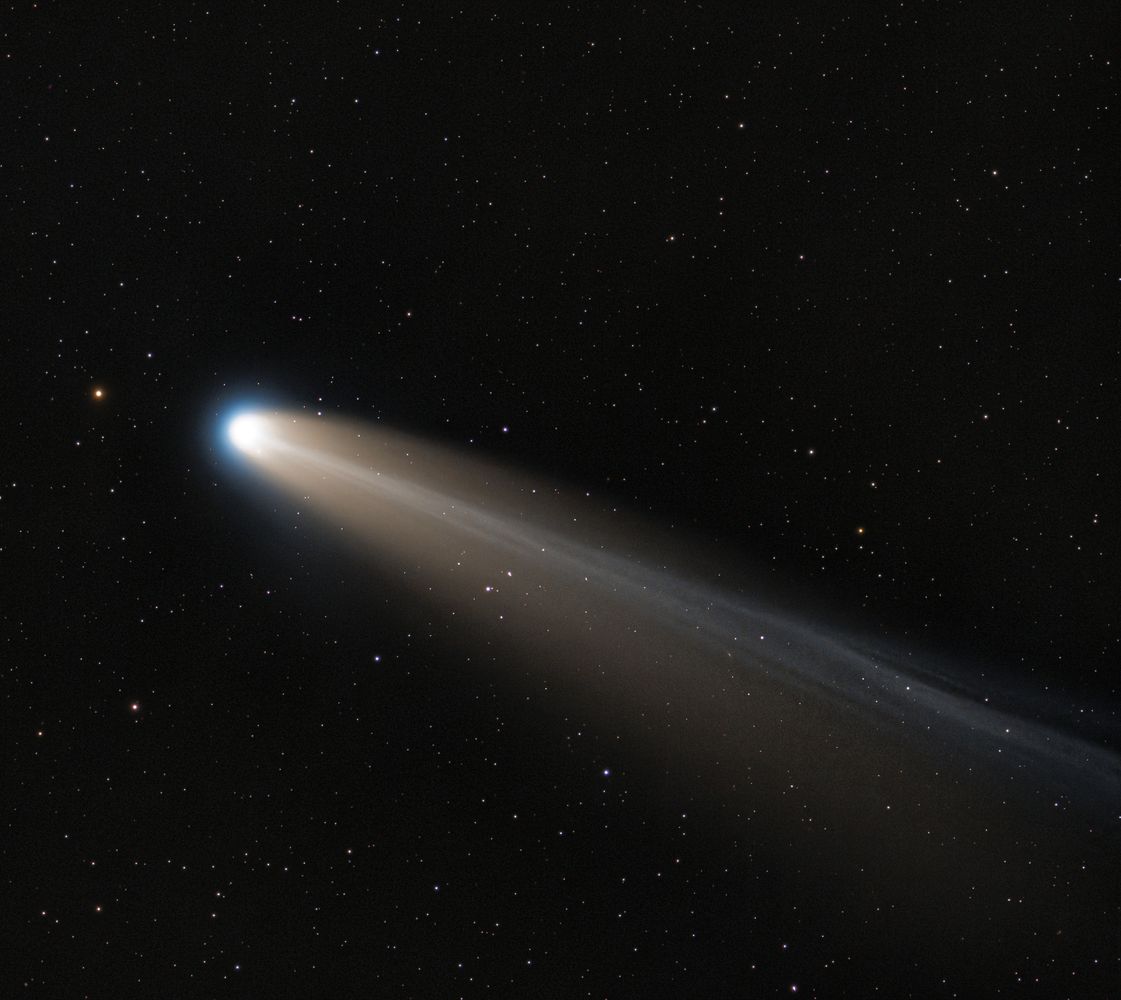
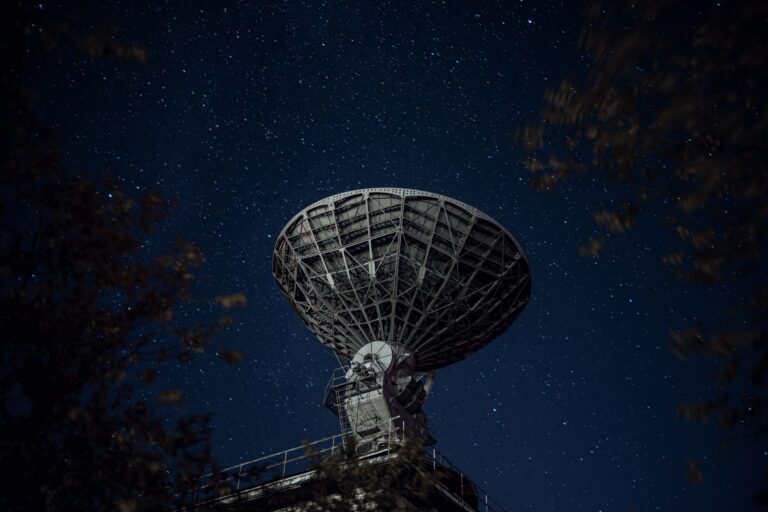
On 26 August 2025, NASA’s Goldstone radar dish in California pointed at a patch of sky where an asteroid called 1998 SH2 was supposed to be. Nothing came back. No echo, no signal, nothing. The object had been tracked since 1998, its orbit calculated from 148 separate observations, and for 27 years it had behaved exactly the way an asteroid is supposed to behave. Then it simply wasn’t where the math said it should be.
That missed appointment turned out to be the first clue that 1998 SH2 isn’t an asteroid at all. A team led by Davide Farnocchia at NASA’s Jet Propulsion Laboratory, publishing in Nature Astronomy, traced the object’s real position and found it was 153 arcseconds off, a 19 sigma deviation that is far too large to be a simple measurement error. Something was steering it.
Asteroids and comets are usually easy to tell apart. Comets grow a glowing tail of gas and dust as they near the Sun, asteroids don’t. But over the past few years, astronomers have identified a strange middle category: objects that show no visible tail, yet still drift off their gravity only predicted paths, as if something invisible were gently pushing them. These are informally called dark comets, and until now only 14 had ever been identified. 1998 SH2, a 380 meter rock with an oddly dark, low reflectivity surface, joins that short list, but with a twist: this time, researchers caught it in the act.
The object is 380 meters across, and it just doubled as the smallest comet ever detected by radar. After the missed 26 August track, the team recalculated 1998 SH2’s orbit assuming a small extra push, a non gravitational acceleration consistent with gas escaping from its surface. That correction worked, and it let them successfully catch the object with radar on 2 September 2025. But the size of that push was ten times larger than anything sunlight driven effects, the so called Yarkovsky effect, which subtly nudges every asteroid, could explain. The only remaining explanation was outgassing, ice turning directly to gas and leaking out from beneath the surface, exactly what comets do.
So the team pointed some of the largest telescopes on Earth at it. The 3.6 meter Canada France Hawaii Telescope caught a faint, low brightness tail stretching about 20 arcseconds. The European Southern Observatory’s 8 meter Very Large Telescope in Chile confirmed it, an even longer tail extending to the southwest. 1998 SH2 was quietly leaking material into space, so faintly that no previous survey, across 27 years of observations, had ever noticed.
The tail was made of surprisingly large dust grains, up to 600 micrometers across, far bigger than the fine haze typical of most comets. Modeling the grains’ trajectories showed they were released in a short window between late August and early September 2025, weeks after the object’s closest pass by the Sun in July. That delay matters, it suggests the ice doing the venting sits buried below the surface, insulated enough that heat takes weeks to reach it, similar to what’s been measured on the famous comet 67P, visited by the European Rosetta spacecraft. The gas producing this activity is estimated at roughly 1.2 septillion water molecules escaping per second, enough to explain both the trajectory shift and the visible tail, and more than powerful enough to lift dust grains that size off the surface.
Following the discovery, the Minor Planet Center gave 1998 SH2 a dual identity. It now carries both its old asteroid designation and a new comet name, P/1998 SH2.
This is the first time a hidden comet was found by predicting it mathematically first, then confirming it with a telescope second, rather than the usual reverse order. That order matters, because there are roughly 2,000 known near Earth objects that share the same kind of orbit as 1998 SH2, orbits shaped by past encounters with Jupiter, and researchers now suspect some meaningful fraction of them could be unrecognized comets too. Of those, 285 are officially classified as potentially hazardous, meaning their paths bring them within about 7.5 million kilometers of Earth’s orbit and they’re large enough to matter.
That reclassification isn’t just a labeling exercise. Comets and asteroids don’t move in quite the same way. A comet’s outgassing can nudge its future path more unpredictably than gravity alone would suggest, which is exactly the kind of uncertainty that matters for anyone modeling long term impact risk or planning a deflection mission like NASA’s DART. The researchers argue that planetary defense calculations should start accounting for comet like behavior more systematically, instead of assuming every tracked near Earth object plays by simple asteroid rules. There’s also a deeper implication. If a meaningful number of these objects hold onto ice, they may be part of the same population that delivered water to Earth billions of years ago, quietly relevant to a question about our own origins.
For now, the risk from 1998 SH2 itself remains zero for the foreseeable future. But the method used to unmask it, reading a subtle wobble in decades of tracking data before ever pointing a telescope at it, may soon reveal that the solar system’s asteroid population has been hiding a lot more comets than anyone assumed.
Source: D. Farnocchia et al., “Non-gravitational acceleration indicative of cometary activity of near-Earth object,” Nature Astronomy (2026). DOI: 10.1038/s41550-026-02913-7