 Editorial NexoScience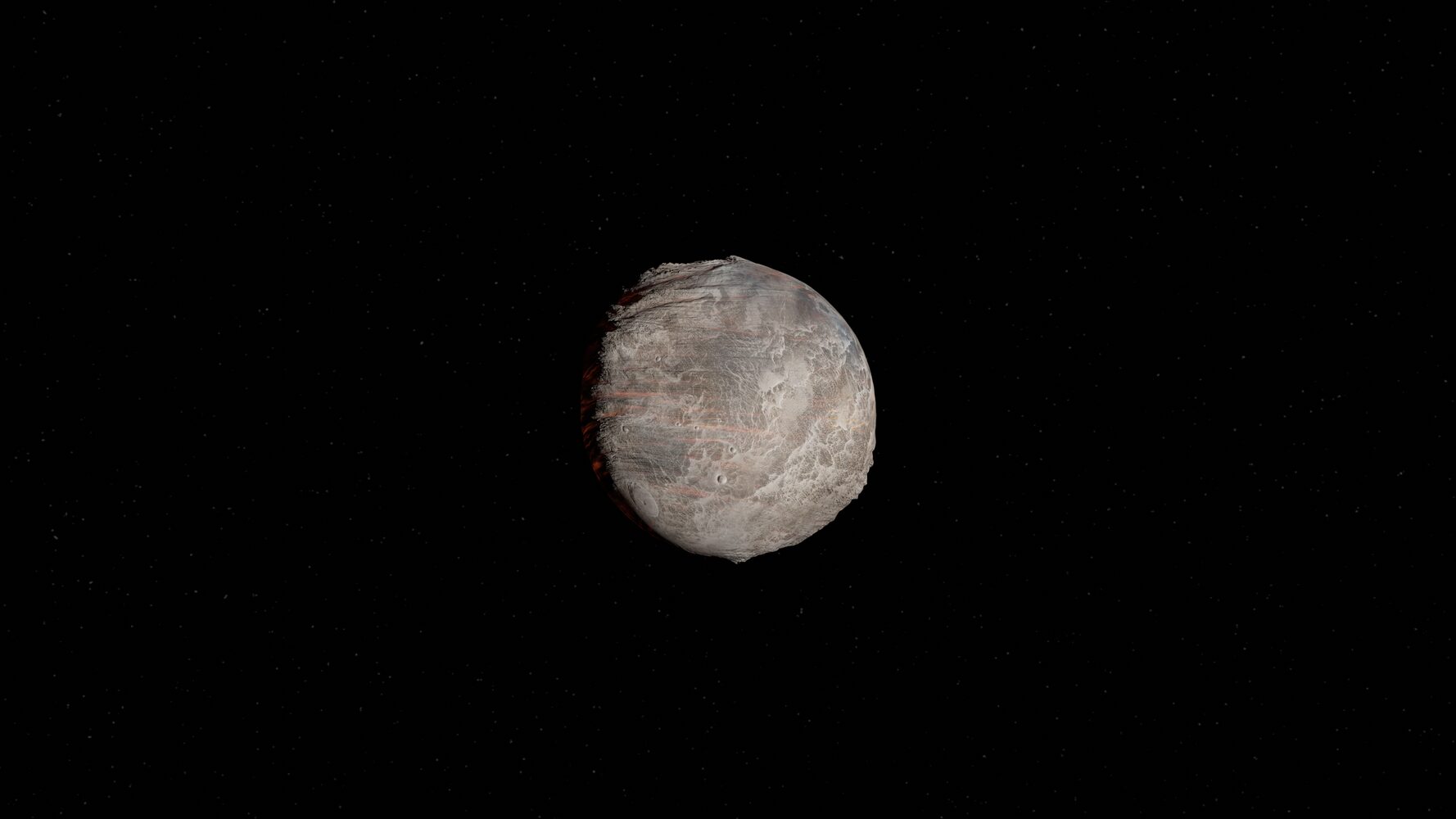
In 1995, astronomers confirmed the first planet ever found orbiting a sunlike star. Three decades and more than 5,800 confirmed exoplanets later, one question had still never been answered with real data: does any small, rocky, temperate world beyond our solar system actually hold on to an atmosphere? A team led by researchers at Harvard and the Carnegie Institution for Science just answered it, and the planet in question sits right in the habitable zone of its star.
The planet is LHS 1140 b, and it is about as close to an Earth analog as astronomers have found. It orbits a small, cool red dwarf star 48 light-years from Earth, has 5.60 times Earth’s mass and 1.73 times Earth’s radius, and receives 42% of the sunlight Earth gets, enough to keep its surface temperature around 226 Kelvin (about -47°C) if it has no atmosphere to trap heat, and warmer if it does. That places it squarely in the “liquid water” habitable zone, the range of distances from a star where a rocky planet could plausibly keep water on its surface.
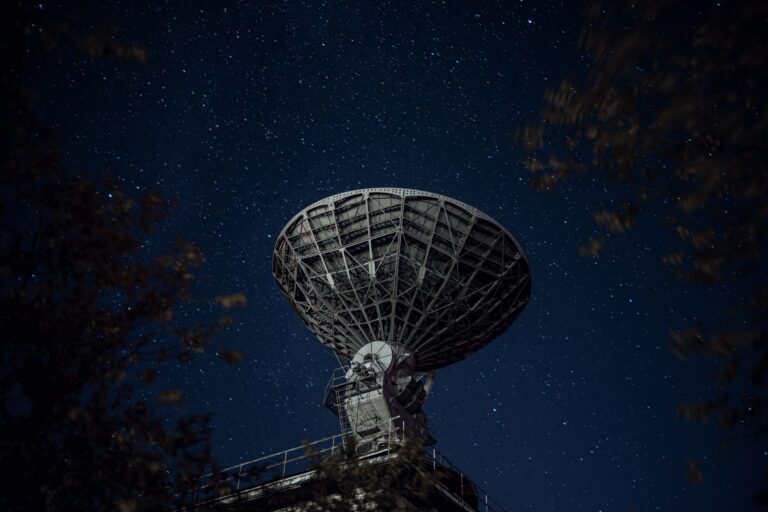
Using the WINERED spectrograph on the 6.5 meter Magellan Clay telescope in Chile, the team watched LHS 1140 b cross in front of its star on the night of September 23, 2024, along with its smaller, hotter sibling planet, LHS 1140 c. As starlight filtered through LHS 1140 b’s upper atmosphere, it left a fingerprint: a dip in brightness at a very specific infrared wavelength, 10,833 angstroms, produced by helium atoms in an excited, “metastable” state. That signature is the clearest evidence yet of a real atmosphere on a small rocky planet inside a habitable zone.
The excess absorption measured 1.24%, and it did not just appear during the transit itself. It showed up in the nine exposures before the planet even crossed the star’s disk and faded out gradually in the eight exposures afterward, exactly the smooth, gradual pattern predicted for a tail of gas being blown off the planet by stellar radiation, rather than a brief instrumental fluke or stellar flare. The team ran the numbers every way they could think of to break the result: contamination from Earth’s own atmosphere, activity on the star itself, random noise. None of it held up. The signal was real.
Here is the twist that keeps this from being a simple headline about “Earth’s twin found.” When the same team pointed WINERED at LHS 1140 b again in September 2025, the helium signature was gone. Modeling suggests the planet’s atmosphere is losing gas to space at a variable rate, driven by X-ray and ultraviolet radiation from its star, and that rate can apparently drop low enough some years to become undetectable. The researchers estimate an escape rate around 200 million grams per second in 2024, a stream of gas thin enough that it would take billions of years to strip the whole atmosphere at that pace, but real enough to show the planet is actively losing material right now.
The chemistry of what is escaping is just as telling. The models point to an upper atmosphere rich in helium and unusually poor in hydrogen, exactly what theory predicts happens when a small planet’s atmosphere is slowly boiled off by its star over billions of years: the lighter hydrogen escapes first and fastest, leaving helium behind. That fits a broader idea in exoplanet science called the “cosmic shoreline,” a rough dividing line between planets that keep atmospheres and planets that end up airless. LHS 1140 c, which is smaller and sits closer to its star, showed no helium signal at all, consistent with having little or no atmosphere left, exactly where the cosmic shoreline model would put it.
None of this means LHS 1140 b is confirmed to be a living world, or even that its atmosphere looks anything like Earth’s. The team cannot yet say what else is in it, whether it holds water vapor, carbon dioxide, or something more exotic, and the fact that the signal vanished a year later is a reminder of how fragile and hard to pin down these atmospheres are. What the result does establish is narrower and still significant: a rocky planet in a habitable zone can hold an atmosphere long enough for us to catch it in the act, and telescopes on the ground, not just in space, are now sensitive enough to prove it.
Source: Cherubim, C., Vissapragada, S., Cunningham, T., et al. “Helium escaping from the atmosphere of a nearby rocky exoplanet orbiting in a habitable zone.” Science, published online July 16, 2026. DOI: 10.1126/science.aea9708. Open access preprint: arXiv:2607.14326.