 Editorial NexoScience
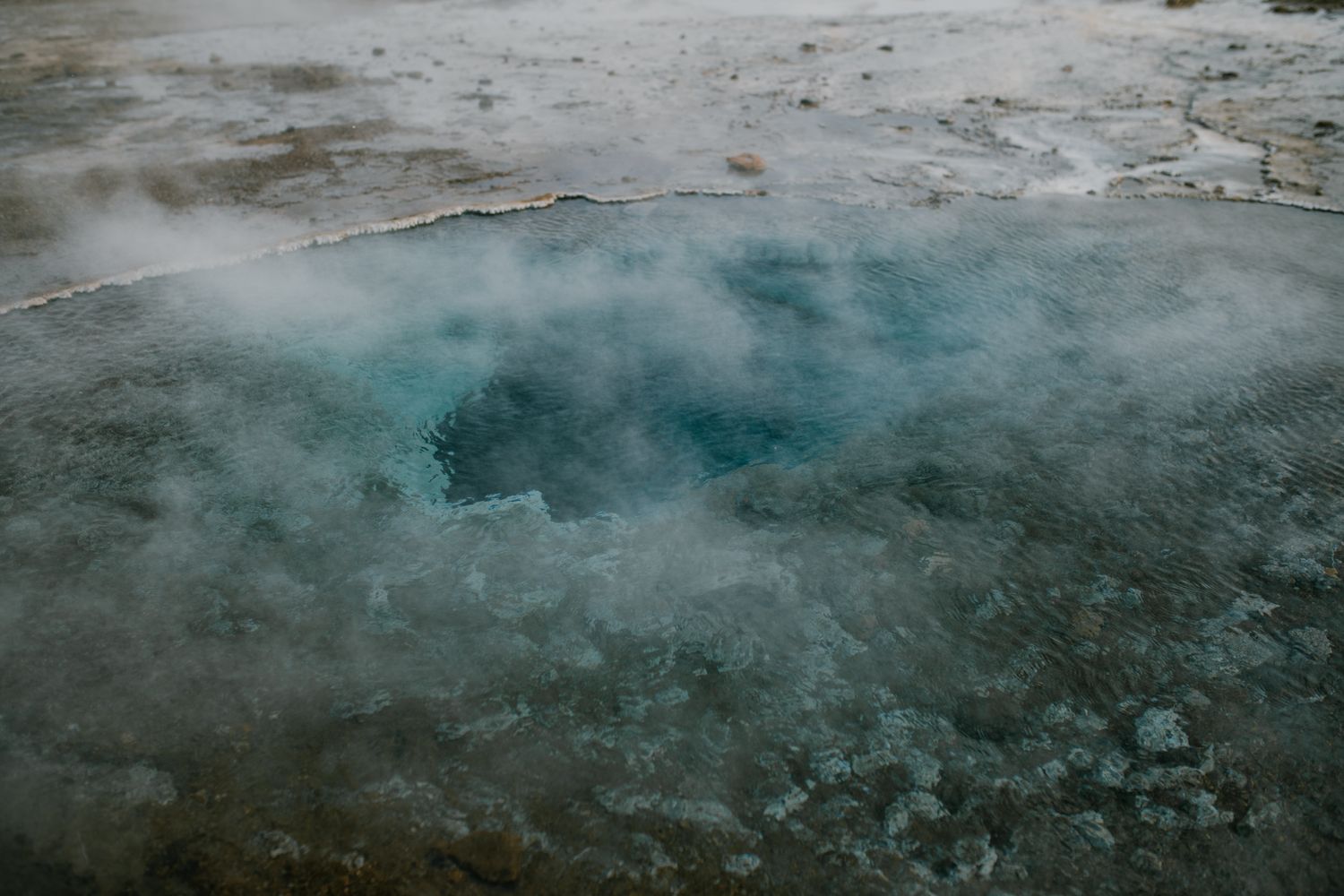
Dip a hand into one small creek in northern California and you’d pull it back fast. The water runs hot enough to scald. Something lives in it anyway, and by the textbooks it shouldn’t be able to. It’s an amoeba, a single cell with a nucleus, and it keeps dividing at 145 degrees Fahrenheit (63 degrees Celsius), the hottest temperature yet recorded for any complex cell.
The organism is called Incendiamoeba cascadensis, a name that means “fire amoeba” of the Cascades, the mountain range where it turned up. A team led by Angela Oliverio, a microbiologist at Syracuse University, described the fire amoeba in the journal Cell. For decades after heat-loving microbes were first found, no eukaryote had been shown to replicate above 140 F (60 C). Eukaryotes are the branch of life whose cells keep their DNA inside a nucleus, the group that includes fungi, plants and people. The fire amoeba clears that old line, and it offers a fresh answer to a very old question: how hot can complex life get?
Simple microbes still own the real heat records. The champion is an archaeon, Methanopyrus kandleri, which grows at 252 F (122 C), well past the boiling point of water at sea level. Among bacteria, Geothermobacterium ferrireducens grows up to 212 F (100 C). Complex cells have always lagged far behind. The commonly cited ceiling for eukaryotes, 140 F, rests on a handful of fungi and red algae. The previous amoeba record belonged to Echinamoeba thermarum, at about 135 F (57 C). Some researchers had even proposed a hard limit near 144 F (62 C), on the idea that the membranes around a cell’s internal compartments fall apart in that kind of heat. The authors point out that this bound came from limited samples.
The hunt took barbecue tongs and patience. The creek is a tributary of Hot Springs Creek in Lassen Volcanic National Park, one of the few spots in that acidic volcanic landscape where the water is close to neutral. Its temperature ranged from about 120 F to 149 F (49 C to 65 C). Beryl Rappaport, a doctoral student in Oliverio’s lab, dipped vials into the steaming water while gripping them with extra-long barbecue tongs, she told NPR. Back in the lab, the team added a wheatberry to each sample to feed the native bacteria, which in turn fed the amoeba. Over three years of sampling, from 2023 to 2025, the amoeba came back from 14 of 20 sampling locations. In 2025 the team recovered it straight at 145 F, and those cultures have lived in a 145 F incubator for months.
It’s a new genus, not just a new species. Its closest known relative is Vermamoeba vermiformis, an amoeba often pulled from household water heaters that tops out around 104 F to 113 F (40 C to 45 C). The two share a gene sequence that’s a standard barcode for telling species apart, but only 94% of it matches. Within the Vermamoeba genus, that same sequence differs by less than 1%. The fire amoeba also seems picky about where it lives. An identical sequence showed up in a hot microbial mat in New Zealand’s Taupō Volcanic Zone, and close relatives appeared in samples from Yellowstone National Park. Every match came from a geothermal area.
The record is about dividing, not just surviving. Scientists set thermal limits at three levels: completing the life cycle, staying active, and simply staying alive. The fire amoeba’s record sits at the toughest level. The team grew it at 17 temperatures, from 86 F to 147 F (30 C to 64 C), in four flasks each. It grew best at 131 F to 135 F (55 C to 57 C) and still multiplied at 145 F, though not at 147 F. At the cold end it stopped growing at 104 F (40 C), the temperature of a hot tub. Using a technique that physically swells cells so their insides can be seen, the researchers caught amoebae in the middle of mitosis at 145 F. That matters. For the fungi reported near this range, nobody has yet shown full cell division rather than the simple stretching of a filament, the authors wrote.
It switches between a sprint and a stroll. The cells are small, about 39 micrometers long when stretched out, roughly half the width of a human hair. They move in two modes: a long, worm-like shape and a rounder blob that pushes out little feet. The worm shape is the fast one, covering 28.3 micrometers a minute at 135 F versus 17.1 for the blob, which explores more ground. At 135 F a cell flips between modes about every minute and a half. At 122 F (50 C) it waits nearly four minutes. The authors suggest the habit suits a stream where temperatures can shift within a few centimeters. Movement peaked at 135 F and lasted up to 147 F.
Past its limit, it locks itself away. Above 147 F the amoeba curls into a cyst, a dormant capsule many amoebae use to wait out bad conditions. As the cysts form, they sprout fast-moving, hair-like structures that the team hasn’t seen in any other species and thinks may help sense temperature. Cells heated to 158 F (70 C) bounced back once the water cooled to 140 F. Cells heated to 176 F (80 C) didn’t. Its water-heater cousin does far worse: Vermamoeba cysts are already inactivated at 140 F.
The genome went big instead of small. Heat-loving fungi tend to trim their genomes, and the fire amoeba did the opposite. Its genome is slightly larger than its cousin’s. More than half of its predicted genes fall into families found in no other amoeba the team compared, which hints at a lot of homegrown hardware. Compared with amoebae that live at mild temperatures, it carries extra genes for sensing the environment and for protein care. That includes molecular chaperones, which help other proteins fold properly and stop them from clumping, plus calcium and other signaling networks that can trigger fast responses to heat.
Heat flips a set of genetic switches. When the team compared amoebae grown at 118 F (48 C) with those grown at 142 F (61 C), the hotter cells ramped up chaperones, DNA repair and membrane traffic, the system of tiny bubbles that shuttle cargo between compartments. They dialed down energy production and building pathways, as other eukaryotes do near their limits. Here’s the thing, though. Of the 200 genes that changed the most, nearly three in four have no known function. A big part of the fire amoeba’s heat strategy is still a blank page.
Its proteins borrow a trick from the hottest microbes. A computer model predicted that the fire amoeba’s proteins, taken as a whole, start to unravel at about 124 F (50.9 C), against 116 F (46.9 C) for its cousin. The amoeba also had five times as many proteins predicted to hold together above 140 F. Looking at the most abundant proteins, the team found fewer “sticky” water-repelling patches on their surfaces, which tend to make proteins clump in the heat. They also found more positive charges. Honestly, this is the result the authors call most striking. That surface pattern matches only the most heat-tolerant prokaryotes in the comparison, such as Thermus aquaticus, the bacterium that gave biology a heat-proof enzyme for copying DNA. Like charges repel, a bit like magnets held pole to pole, so a coat of positive charge can keep proteins from piling into useless lumps. Two very distant branches of life seem to have landed on the same fix.
Much of this is still prediction. The authors are frank about the gaps. The fire amoeba can’t yet be genetically modified, so none of the candidate heat genes has been tested directly. Many of its genes have no assigned function, and the genome isn’t assembled down to whole chromosomes. The melting temperatures and protein structures are computer predictions that still need lab confirmation. And the gene activity data compare just two temperatures. The exact margin over other heat-loving eukaryotes is also open, since the team calls for retesting them under the same standard conditions.
The record probably won’t stand for long. The authors end with a sports comparison. The four-minute mile was long thought impossible, and after the first runner broke it, the record fell again within weeks. The Yellowstone relatives hint at more fire amoeba species out there. And this one is easy to grow and dense in culture, which makes it a handy lab model and a potential source of heat-stable proteins for industry. “Perhaps the upper temperature record will be broken again soon,” Oliverio told NPR.
Source: Rappaport, H. B., Petek-Seoane, N. A., Tyml, T., Niblo, J. K., Mikus, F., Gilbert, N. E., et al. “A geothermal amoeba sets a new upper temperature limit for eukaryotes.” Cell (2026). DOI: 10.1016/j.cell.2026.08.043