 Editorial NexoScience
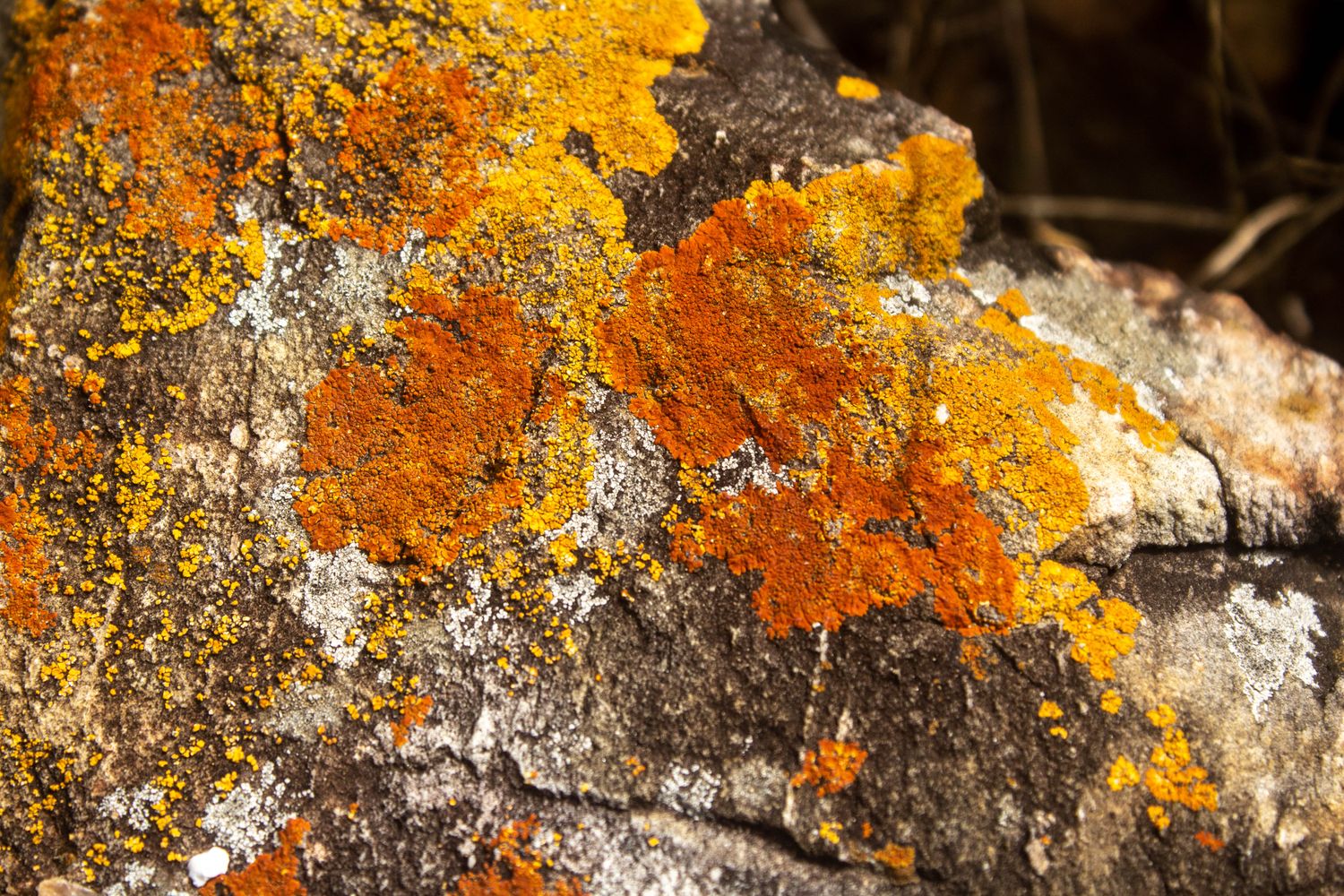
In the 1920s, the Italian botanist Maria Cengia Sambo cultured bacteria out of lichens and proposed something the field was not ready for, that a lichen might be a “polysymbiosis”, a partnership of more than two organisms. The idea never took hold. For the next hundred years the working definition stayed the one you can check by eye under a lens, a fungus plus a photosynthetic partner, because those happen to be the only two members big and colorful enough to see.
A genome-scale survey of lichens collected around the world suggests Sambo was onto something. Researchers reassembled the genetic material of roughly 480 lichen samples, most of it already sitting in public databases from a dozen earlier projects, and pulled about 1,000 near-complete genomes out of it. Almost everything that came back was either bacterial or belonged to the fungus that makes up most of the lichen’s body. The work was published 7 November 2024 in the journal PLoS Biology.
Four bacterial families turn up wherever lichens do. Out of 75 bacterial families recovered in total, just four (Acetobacteraceae, Beijerinckiaceae, Sphingomonadaceae and Acidobacteriaceae) accounted for as many appearances as the other 71 put together. Screened by their genetic barcodes, the two commonest showed up in very nearly every lichen in the data set, on every continent sampled, and it made no difference which fungus and which alga made up the lichen itself. Whatever these bacteria are doing there, they are not doing it by accident.
Each partner is missing a different vitamin. Almost none of the lichen fungi carried the genes to build biotin, vitamin B7, from scratch, which makes them auxotrophs, organisms that have to take in a nutrient because they can no longer manufacture it. The bacteria had the opposite hole in their toolkit: not one of the annotated bacterial genomes held a complete pathway for thiamine, vitamin B1, only a partial salvage route in some of them. But 43% of those same bacteria could build biotin, against almost none of the fungi, and the few algae good enough to annotate came with partial or complete pathways for both.
The gaps and the surpluses line up. In the handful of samples complete enough to read all three partners at once, every fungus that could not make biotin was sitting beside an alga or a bacterium that could, and the same held for thiamine. It reads less like a couple with a lodger than like a dinner where every guest forgets a different dish and somebody else always turns up carrying it. The suspicion is not new. Culturing work in the 1950s on one lichen, Peltigera aphthosa, showed its alga Coccomyxa leaking biotin in quantity. What is new is watching the pattern hold across hundreds of lichens at once.
The oldest idea about these bacteria did not survive the check. Since the 1930s, the favorite explanation for why bacteria live in lichens has been nitrogen fixation, the trick of pulling nitrogen out of the air and turning it into a form living things can use. Papers over the decades reported finding nifH, the key gene for that job, in lichen bacteria. In this much larger, genome-resolved collection, nifH turned up in exactly one genome outside the cyanobacteria already known to do it. The researchers checked that the method was not at fault, finding the gene easily in reference genomes of the same bacterial groups from other environments, which makes the silence a result rather than a miss.
Some of the residents run a kind of photosynthesis that needs neither oxygen nor chlorophyll. Genes for anoxygenic photosynthesis, which uses bacteriochlorophyll instead and gives off no oxygen, showed up across two of the four dominant families, a trait described in just one lichen bacterium before this survey. None of these bacteria could fix their own carbon, though. They are heterotrophs, living on carbon that somebody else made, which fits a picture of tenants running on the lichen’s sugars and its cast-off methanol. If they pay rent at all, it is not in food.
The authors are careful to call the vitamin trade a prediction, not a sighting. All of it comes from gene content, and nobody has yet caught a vitamin crossing from one species to another inside a living lichen. The researchers also note that this kind of sequencing has real blind spots. Even the algae, large enough to see under a household microscope, could often be confirmed only by their genetic traces rather than by a full assembled genome, which means the number of residents still missing from the census is probably larger than the one they counted.
What the survey does settle is that the textbook lichen, a fungus and its photosynthetic partner, is a definition written by 19th-century microscopes and shaped by what they could resolve. The harder step comes next, catching the vitamins in transit and showing that the exchange is real and not just written into the genes. Until somebody manages that, the tidiest description of a lichen may be the one Sambo reached for a century ago, back when nobody could sequence anything at all.
Source: Tagirdzhanova G, et al. “Microbial occurrence and symbiont detection in a global sample of lichen metagenomes,” published in PLoS Biology on 7 November 2024. DOI: 10.1371/journal.pbio.3002862