 Editorial NexoScience
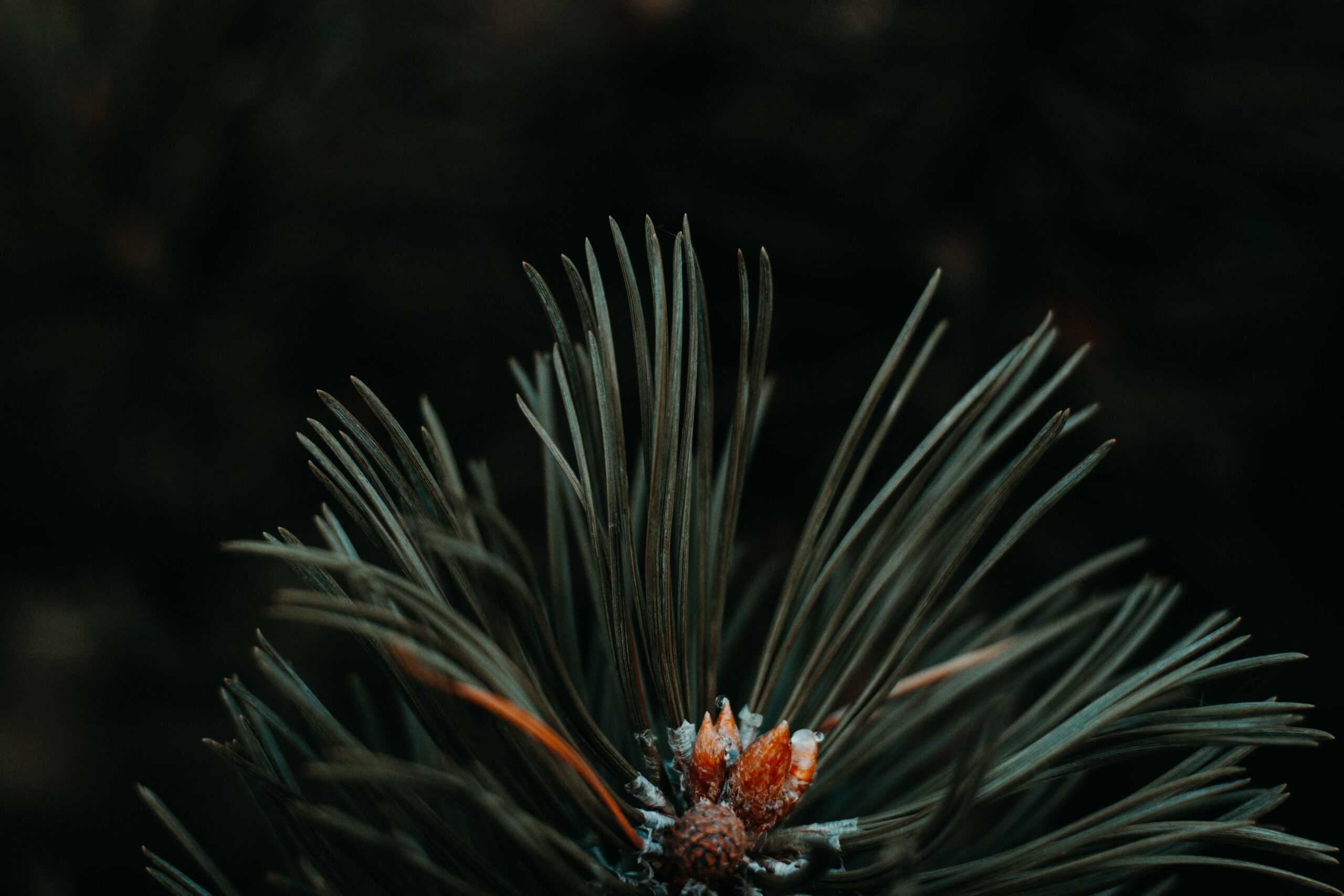
Picture yourself standing in a pine forest in northern Sweden, somewhere far enough north that the average temperature over a whole year barely clears freezing. The soil under your boots is poor. There is almost no nitrogen in it, and nitrogen is what trees need to build the proteins that make new wood and new needles. Now look up at the needles above your head. Inside them, invisible and uncountable, live bacteria that pull nitrogen straight out of the air. And according to a study published in Tree Physiology, nothing the researchers threw at those bacteria could make them stop.
The forest in question has been fertilized on purpose since 2004. At the Åheden research forest, a naturally regenerated stand dominated by Scots pine (Pinus sylvestris) roughly 150 years old, plots have been dosed every year with five different amounts of ammonium nitrate. The researchers picked the two extremes, the untouched control plots and the most heavily fertilized ones, and sampled healthy one-year-old needles from a dozen trees in each. They surface-sterilized the needles so that only what lived inside would count, then went looking for nitrogenase, the oxygen-hating enzyme that does the actual work of converting atmospheric nitrogen into a form living things can use. They found it in needles from every single tree.
Fertilizer is supposed to shut this behavior down. Fixing nitrogen from the air is metabolically expensive, so organisms that can do it usually stop when nitrogen is handed to them for free. That pattern is well documented, and it shows up at this very research site: the cyanobacteria living on mosses at Åheden cut their nitrogen fixation roughly eightfold under the same fertilization. Root nodules on tropical legume trees shut down almost entirely when soil nitrogen rises. The researchers went in expecting the needle bacteria to behave the same way. They didn’t.
The bacteria in the needles shrugged the fertilizer off completely. Using an acetylene-reduction assay, which measures nitrogenase activity by watching the enzyme convert acetylene gas into ethylene, the team recorded 0.09 nanomoles of ethylene per hour per gram of dry needles in control plots against 0.12 in fertilized ones. If anything the fertilized needles trended slightly higher, and the difference was statistically indistinguishable from noise. The amount of nitrogenase protein itself was equally flat between the two groups. Decades of nitrogen dumped on the forest floor moved the needle bacteria not at all.
The fertilizer definitely reached the trees, which is what makes the null result interesting. Needle chemistry changed measurably: nitrogen content in fertilized needles rose to 1.37 grams per gram of dry mass from 0.93 in the controls, a clear signal that the treatment worked exactly as intended on the plant. The needles were chemically different environments. The bacteria inside them behaved identically anyway. Even the carbon-to-nitrogen ratio, the variable most often linked to fixation rates elsewhere, showed no relationship with how hard these bacteria worked.
The researchers have a possible explanation, and it is evolutionary rather than chemical. Modeling work has suggested that in forests as nitrogen-starved as the boreal north, it may simply be cheaper for a bacterium to fix nitrogen constantly than to build and maintain the regulatory machinery needed to switch the process on and off in response to conditions. In that scenario these needle-dwellers aren’t ignoring the fertilizer so much as they are incapable of responding to it. They are locked in, unlike their moss-dwelling neighbors a few meters below.
Thirteen bacterial colonies came out of those needles, and most of them really do fix nitrogen. Grown on nitrogen-free media and then identified by 16S rRNA sequencing and confirmed by whole-genome sequencing, they fell into six genera: Bacillus, Variovorax, Novosphingobium, Sphingomonas, Microbacterium and Priestia. All six have been tied to nitrogen fixation or plant-growth promotion in other plants. Ten of the thirteen strains actively fixed nitrogen in liquid culture when tested on their own, with a Microbacterium strain the most productive of the lot. The three that didn’t may have needed different conditions, or may have been working below what the assay could detect.
None of this adds up to much nitrogen in any given summer. The study authors are blunt about it. Scaled up from the needles to the whole forest stand, the fixation rate lands around a thousand times smaller than the amount of nitrogen a Scots pine actually consumes to grow over a year. As a nutrient source for a living tree next season, it is close to irrelevant. What the researchers argue instead is that the timescale is wrong. This landscape has carried continuous boreal forest for roughly the entire span since the last ice sheets retreated from it, thousands upon thousands of growing seasons, and a trickle that small running that long is no longer trivial. It becomes a slow contribution to the nitrogen banked in the soil itself.
The study’s own limits deserve a clear look before anyone runs with this. The researchers acknowledged that they compared only two of the five available nitrogen doses, the lowest and the highest, so nobody knows how the bacteria respond to anything in between. Their forest-wide estimate rests on simplifying assumptions they flag themselves, including a constant fixation rate across the whole canopy and across an entire growing season, which sits uneasily next to the significant day-to-day variability they measured in the raw assay. And the acetylene-reduction assay is an indirect proxy: it tracks a side reaction of the nitrogenase enzyme rather than nitrogen fixation itself. It is standard practice in the field, but it is still one step removed from the process everyone actually cares about.
The open question now is whether those intermediate fertilizer doses hide a threshold nobody has found yet, and whether needle bacteria in the other dominant conifer of these forests, the Norway spruce, hold up the same way. Underneath both sits a harder question about what else in the boreal canopy has quietly stopped listening to the nitrogen humans have been adding to it for a century.
Source: “Presence and activity of nitrogen-fixing bacteria in Scots pine needles in a boreal forest: a nitrogen-addition experiment,” published in Tree Physiology on 18 April 2023. DOI: 10.1093/treephys/tpad048