 Editorial NexoScience
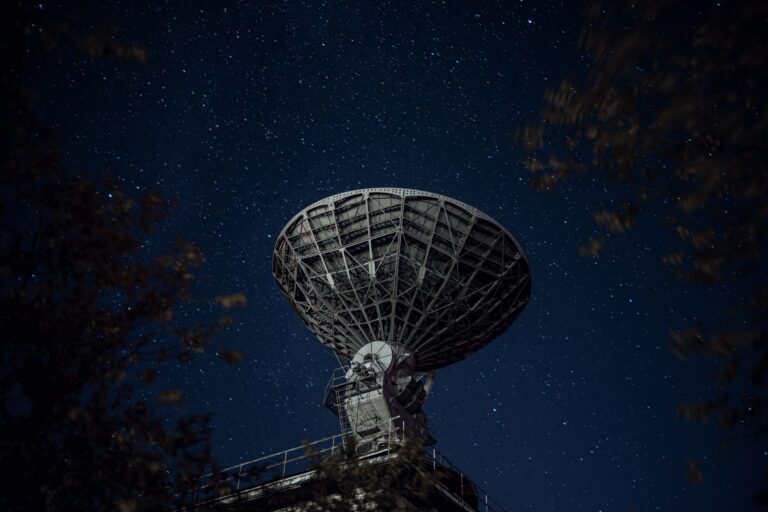
In July 1965, two radio engineers at Bell Labs kept picking up a faint hiss in their antenna that refused to go away no matter which direction they pointed it. They cleaned pigeon droppings out of the dish, checked every cable twice, and still the noise stayed. It turned out to be the afterglow of the Big Bang itself, the cosmic microwave background, the oldest light in the universe.
For over twenty years now, cosmologists have noticed that this ancient light does something it probably shouldn’t. Across three separate space missions, COBE in the 1990s, WMAP in the 2000s, and Planck in the 2010s, researchers kept spotting the same handful of odd patterns baked into the sky: regions with less correlation than expected, an imbalance between even and odd ripples, a strange alignment between the two largest structures on the map, one half of the sky quieter than the other. Cosmologists nicknamed them the CMB anomalies, and they have spent two decades arguing about whether they are hints of genuinely new physics or just statistical noise.
A new set of maps just made two of those anomalies a lot less impressive. Researchers at Johns Hopkins University reanalyzed all five of the most studied anomalies using freshly cleaned full-sky maps of the cosmic microwave background. The old approach, used since the WMAP era, had to black out about 26% of the sky to hide contamination from the Milky Way’s own dust and radio glow before the anomalies could even be measured. The new cleaning method, built from six older reference maps of the galaxy including data from COBE, WMAP, Planck and a decades-old radio survey called the Haslam map, needs to mask only 1% of the sky to get an equally clean signal.
That difference in masking turns out to matter more than anyone expected. When the team reran the numbers with the smaller, less aggressive mask, two of the five anomalies quietly lost most of their punch. The unusually low correlation between distant points on the sky dropped from a moderately significant 3 sigma down to a much shakier 2 sigma, and the same thing happened to the lopsided variance between hemispheres. In plain terms, a chunk of what looked like a genuine cosmic mystery turned out to be an artifact of how much of the Milky Way scientists were forced to erase from the picture.
The other three anomalies did not budge. The alignment between the sky’s two largest structures held steady at a moderate 3.2 to 3.5 sigma no matter which mask was applied, and the quieter northern hemisphere stayed around 3 sigma too. Only the imbalance between even and odd ripples was mild across the board, under 2.3 sigma in every version of the analysis.
None of this amounts to proof of anything, and the researchers are upfront about that. A few sigma of significance is not a smoking gun. The team ran the same tests on 100000 simulated, perfectly ordinary universes to see how often patterns this strong show up by pure chance, and reminded readers that these five specific anomalies were only flagged as interesting after they were already seen in the data, a habit that tends to inflate how impressive a coincidence looks. Their conclusion is refreshingly cautious: for any alternative theory to beat the standard cosmological model, it would have to explain several of these anomalies at once, not cherry pick the one that still looks significant this month.
The paper is Herold, Addison, Bennett, Nofi and Weiland, “Nearly Full-Sky Low-Multipole Cosmic Microwave Background Temperature Anisotropy. III. CMB Temperature Anomalies,” published in The Astrophysical Journal in 2026 (DOI: 10.3847/1538-4357/ae6860).