 Editorial NexoScience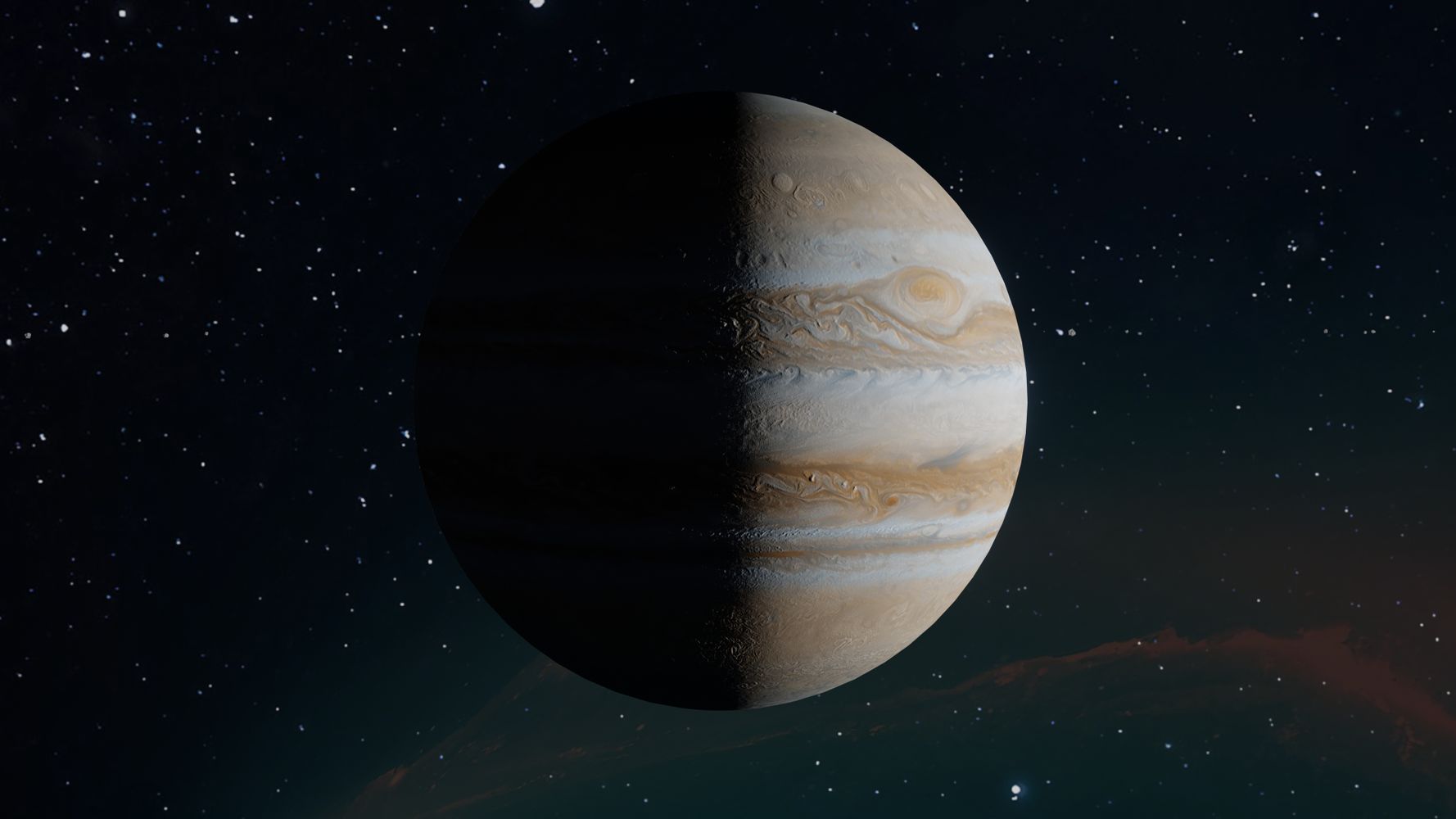
What would it take to convince you that a planet and a star are not always as different as they seem? About 620 light-years away, in the constellation Chamaeleon, there is a world with no star to orbit that just spent the better part of a year making that case to astronomers.
The object at the center of this story is barely large enough to count as a planet in the first place. Astronomers call it Cha1107-7626, a free-floating object with an estimated mass of just 5 to 10 times that of Jupiter, drifting through space without a host star of its own. Objects like this sit in an uncomfortable gap in the textbooks. They are too small to have ignited nuclear fusion like a star, yet in isolation, with no orbit around anything, they do not behave like the planets we know either. Since researchers realized isolated objects like this exist, over two decades ago, one question has followed them everywhere: are these the smallest things that can form the way stars do, or are they giant planets that got kicked out of their home systems entirely? Cha1107-7626 has long been one of the best candidates for answering that question, because it is already known to have a disk of gas and dust circling it, and to be actively pulling material from that disk onto itself, a process called accretion.
Then, over the course of a few months in 2025, the object started behaving like a newborn star having a growth spurt. A team led by Victor Almendros-Abad, using the XSHOOTER spectrograph on the European Southern Observatory Very Large Telescope alongside instruments on the James Webb Space Telescope, tracked Cha1107-7626 across five epochs between April and August 2025. The first observations, in April and May, showed the object in a relatively quiet state. By late June, that had changed dramatically, and it stayed changed through July and August, the last month the team was able to observe it.
The scale of that change is what makes this discovery remarkable. Comparing the quiet months to the active ones, the astronomers measured a six to eightfold jump in the object mass accretion rate, the highest ever recorded for anything in the planetary mass range. During the burst, the object also brightened by roughly 1.5 to 2 magnitudes in visible light, its optical output climbing by a factor of three to six, while its mid-infrared brightness rose by 10 to 20 percent as the inner disk heated up.
The clearest sign that this was genuinely star-like behavior showed up in a single spectral line. During the burst, the hydrogen-alpha line in the object spectrum split into a double peak with a reddish tinge on one side, a very specific signature caused by cool gas falling inward along magnetic field lines and crossing in front of a hot spot on the surface. That pattern, known as magnetospheric or funneled accretion, has been documented for decades in young stars and brown dwarfs. Seeing it this clearly in something with barely more mass than a handful of Jupiters suggests the same magnetic machinery that feeds infant stars can also operate at planetary scales.
The chemistry of the disk itself shifted during the burst too. Using JWST infrared instruments, the team detected a new emission feature consistent with water vapor, something that was completely absent when the object was quiet. They also saw changes in the hydrocarbon emission that marks this as an unusually carbon-rich disk. It is the first time anyone has documented an accretion burst altering the chemistry of the disk around a substellar object this small.
None of this proves Cha1107-7626 is a miniature star, and the researchers are careful about that distinction. The absolute accretion rate they report depends heavily on which physical model is used to convert the observed line brightness into a mass flow. Two different modeling approaches used in the paper agree closely on how much the accretion rate increased during the burst, but disagree by roughly a factor of ten on the total amount of material actually being swallowed at any given moment, a reminder that translating a spectrum into a physical quantity always carries real uncertainty. An older spectrum from 2016 hints that Cha1107-7626 may have gone through a similar episode before, which would make this a recurring event rather than a one-off, but with only two data points a decade apart, the team cannot yet say how often it happens or exactly how long any single burst lasts. Whether objects like this one form the way stars do or began life as planets before being cast out of their systems remains an open question, one this burst does not settle on its own.
By the end of the observing campaign in August 2025, the burst was still going, meaning it had already lasted at least two months with no clear end in sight. What is already clear is that Cha1107-7626 has become the first object in the planetary mass range confirmed to undergo the kind of large, long-lived outburst astronomers call an EXor event, a category previously reserved for young stars.
Source: Almendros-Abad V, Scholz A, Damian B, Jayawardhana R, Bayo A, Flagg L, Muzic K, Natta A, Pinilla P, Testi L. “Discovery of an Accretion Burst in a Free-Floating Planetary-Mass Object.” The Astrophysical Journal Letters, 2025. DOI: 10.3847/2041-8213/ae09a8