 Editorial NexoScience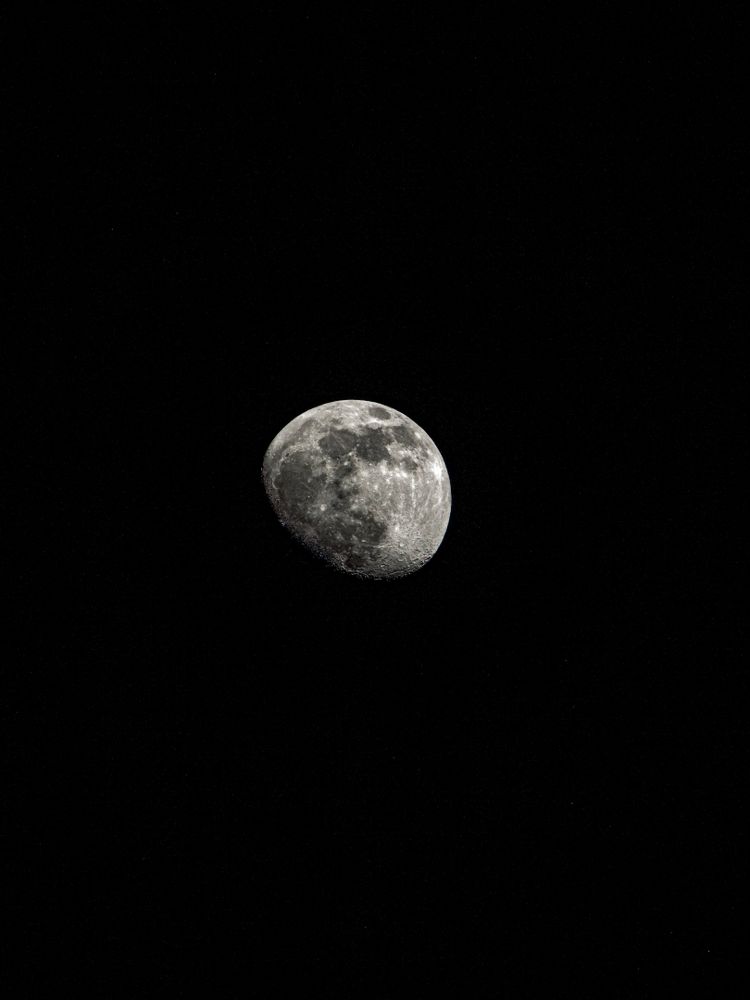
Twenty. That is roughly how many craters of similar size or larger struck Earth for every single one that scarred the Moon during one of the most violent stretches of our planet’s deep history, and it all seems to trace back to a single rock that broke apart in the asteroid belt.
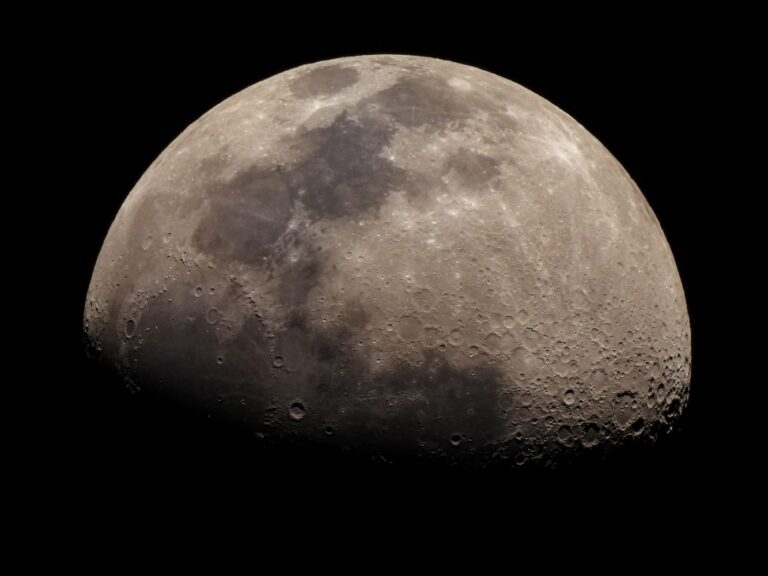
For decades, geologists have struggled to prove that impacts shaped life on Earth beyond the one everyone already knows: the Chicxulub strike that ended the age of dinosaurs 66 million years ago. Earth erases its own scars fast. Weather, plate tectonics and vegetation wipe out craters within a few hundred million years, so only a few dozen confirmed impact sites older than 20 kilometers across still exist anywhere on the planet. The Moon keeps a far better record, and that record has been hinting at trouble around 800 million years ago: unusually young ages clustering on large craters like the 93 kilometer wide Copernicus, plus a pileup of impact glass beads brought home by lunar missions, all pointing at the same window in time.
A new set of collisional and orbital simulations points to a specific suspect. Researchers modeled the breakup of the Eulalia asteroid family, a group of dark, carbon rich fragments left behind when a parent body more than 100 kilometers across shattered close to a gravitational trap called the 3:1 resonance with Jupiter, the point where an asteroid completes exactly three orbits around the Sun for every one Jupiter makes. Fall into that trap and an asteroid’s orbit gets stretched until it starts crossing paths with the inner planets.
According to the simulations, about three quarters of the shattered family’s fragments eventually funneled into that resonance over roughly 150 million years. Some were flung in immediately by the force of the collision itself. Others drifted in gradually over millions of years, nudged along by sunlight, a subtle push called the Yarkovsky effect that slowly reshapes an asteroid’s orbit as it absorbs and re-radiates heat. Either way, once a fragment crossed into the resonance, the outcome was largely the same: a one way ticket toward Earth, the Moon and Mars.
The model does not just predict a bombardment in the abstract, it reproduces the specific craters already mapped on the Moon. Run forward, the simulated Eulalia fragments generate an impact rate and crater sizes that line up with the ages measured for Copernicus and its neighbors, including the timing and structure of the surge scientists had already flagged from lunar samples. Because Earth is a much bigger target, with a gravitational pull that funnels in roughly 20 times more impactors than the Moon receives for a given source population, the same shower would have rained down on our planet at a proportionally larger scale, even though almost none of that evidence survives in the rock record today.
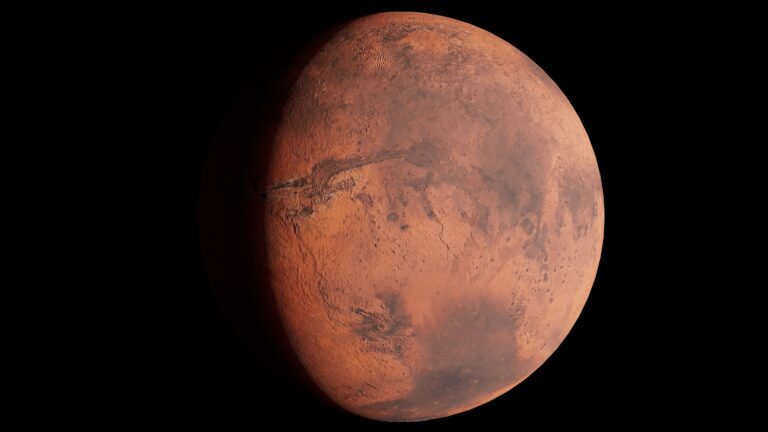
Here is where the story gets more speculative, and the researchers are upfront about that. The timing of this asteroid shower lines up with a genuinely strange period in Earth’s biological history: shifts in carbon isotope records, patches of oxygen starved ocean water, and what looks like a burst of diversification among marine eukaryotes, the group that would eventually give rise to complex life. Mars shows a hint of its own, with a spike in the estimated ages of calderas on its largest volcanoes around the same 800 million year mark, suggesting the impacts may have jostled magma that was already sitting underground. None of this proves the asteroid shower caused any of it. The authors are explicit that no direct geological evidence, such as the telltale iridium layer left by the Chicxulub impact, has been found to confirm a causal link, and ordinary cosmic dust accumulation could explain some of the same chemical signals. What they have is a coincidence in timing striking enough to be worth chasing with more data.
The takeaway is not that one collision rewired life on Earth. It is that a single, well placed catastrophe in the asteroid belt, hundreds of millions of kilometers away, can seed a bombardment that plays out across three worlds for well over 100 million years, long after the original crash is over. Confirming whether it also nudged the course of biology and volcanism on two planets will take more of the kind of dating and modeling that turned this from a coincidence into a testable hypothesis in the first place.
Source: Bottke, W. F., Vokrouhlický, D., Dykhuis, M., & Zellner, N. (2026). An 800-Million-Year-Old Impact Shower on the Terrestrial Planets from the Breakup of the Eulalia Parent Body. Submitted to The Planetary Science Journal. arXiv:2606.05036.