 Editorial NexoScience
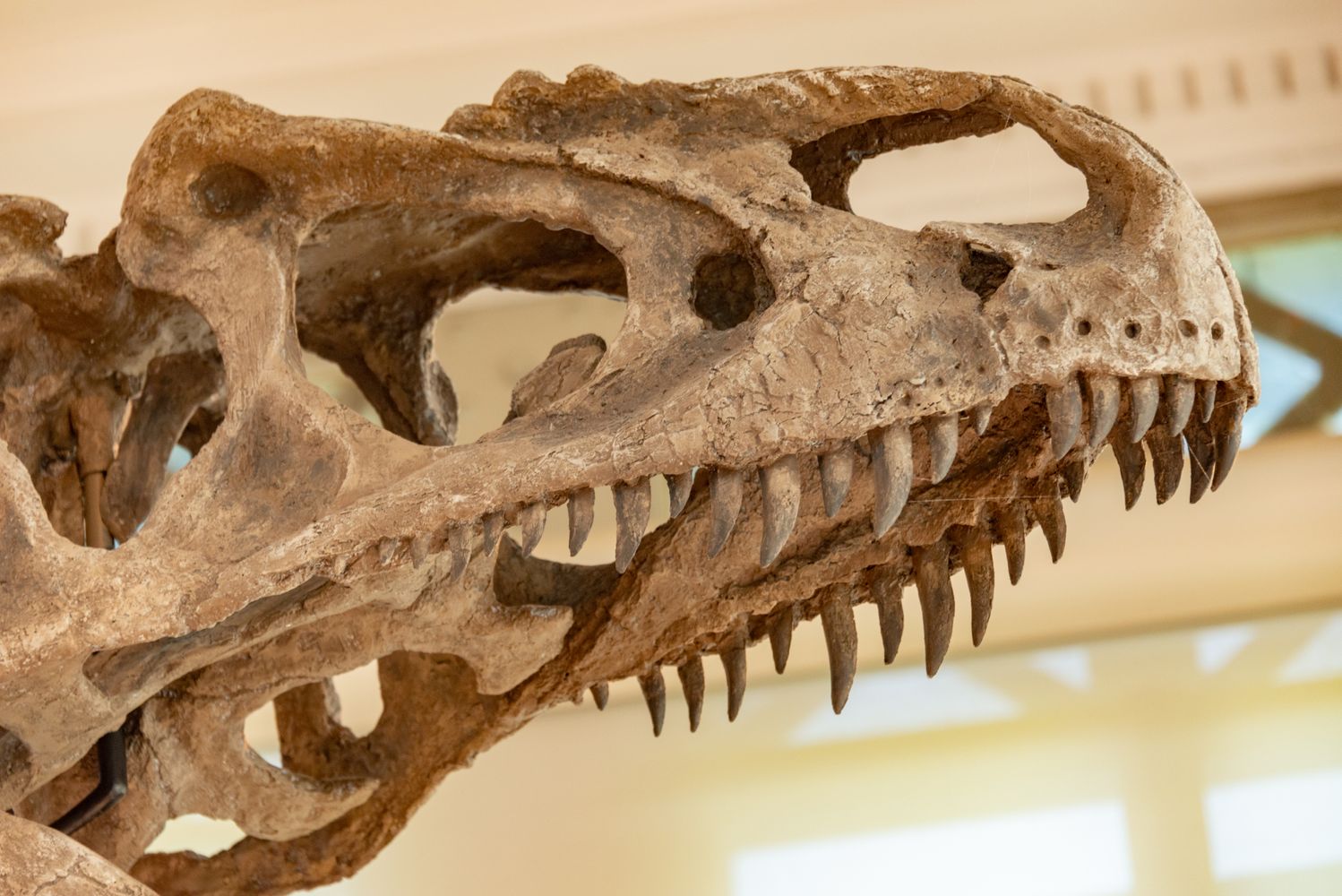
Nobody will ever slide a thermometer under the tongue of a Tyrannosaurus rex. The next best thing turns out to be its teeth. Locked inside the enamel of three teeth dug up in Montana is a chemical trace of how warm the animal ran while those teeth were growing. The reading comes out at about 97.3 degrees Fahrenheit (36.3 degrees Celsius), roughly where a human or an elephant sits.
Randon Flores, a geologist at the University of California, Los Angeles (UCLA), and his colleagues reported the result Sept. 16 in the journal Science Advances. It’s the first T. rex body temperature worked out directly from the chemistry of the dinosaur’s own teeth. Two of the teeth belong to a young adult nicknamed Thomas, kept at the Natural History Museum of Los Angeles County, an animal that probably weighed more than 6,600 pounds (3,000 kilograms) in life. The third is a broken tooth from a second T. rex. All three came from the Hell Creek Formation near Ekalaka, Montana, rock laid down at the very end of the Cretaceous period. For comparison, the team also measured five crocodilian teeth from the same formation. Those came out cooler, at about 87.6 F (30.9 C).
The thermometer is a chemical bond. Carbon and oxygen both come in rare, heavy forms called isotopes. As tooth enamel grows, those heavy atoms sometimes pair up with each other inside the mineral, and how often they do depends on temperature. More pairs form when the body is cooler, fewer when it’s warmer. This “clumped isotope” method has a big advantage over older tricks. It doesn’t need to know what the animal drank, a detail that had muddied earlier attempts on T. rex bone and tyrannosaur teeth. The team drilled tiny samples from the enamel, dissolved them in acid and counted the heavy pairs in the carbon dioxide gas that came off.
The teeth passed a set of tamper checks. A fossil spends tens of millions of years soaking in groundwater, and burial can rewrite its chemistry. So the researchers looked for signs of tampering in several independent ways. The T. rex and crocodile teeth gave clearly different readings, which wouldn’t happen if the same burial process had overprinted both. The enamel and the softer dentin underneath had drifted apart chemically, as expected if only the dentin had been altered. Infrared scans showed the fossil teeth looked more like modern alligator teeth than like a chemically altered Jurassic dinosaur tooth. And the carbonate content matched fresh reptile enamel, a sign that no outside minerals had crept in. None of these checks proves the signal is untouched on its own, the authors noted, but together they found no clear sign of alteration.
The crocodiles ran cooler. The five crocodilian teeth, from a fossil site near McGuire Creek in Montana, averaged about 87.6 F. That fits neatly inside the range living crocodilians prefer, roughly 86 to 95 F (30 to 35 C). Modern crocodiles manage their heat by shuttling between water and sunny banks, which can lift them up to about 9 F (5 C) above the air around them. One fossil tooth did read a hot 100.8 F (38.2 C), but its error bars overlap the comfortable range. The gap between the dinosaur and the crocodiles held up statistically. Same rivers, same weather, two very different internal settings.
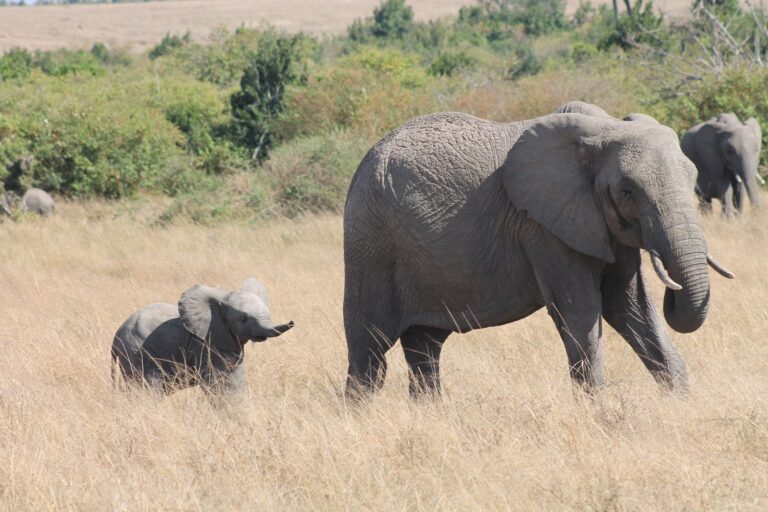
Elephant warm, not bird hot. You know what? The number is less extreme than you might expect for the ancestor line of birds. Indian and African elephants run at about 96.8 F and 97.2 F (36.0 C and 36.2 C), almost exactly where T. rex lands. Ostriches and emus, at around 100 to 103 F (38 to 39.7 C), sit within the margin of error. Smaller flying birds are hotter still, averaging about 106.9 F (41.6 C). “The temperature is about what I would have guessed, higher than a reptile or a slow mammal like a sloth, but lower than an avian,” co-author Robert Eagle, a geobiologist at UCLA, said in a statement.
The dinosaur was warmer than its world. To check that the teeth weren’t just recording a hot climate, the team compared them with two measures of the Montana environment at the time. Fossil freshwater mussels from the last 300,000 years or so of the Cretaceous record summer water temperatures averaging about 78.6 F (25.9 C). A new high-resolution climate model of the period gave yearly average air temperatures of about 64 to 69 F (17.8 to 20.7 C) for the region, depending on how much carbon dioxide it assumed. T. rex beat both. Its body was holding heat above its surroundings, not simply soaking up the warmth of a hot planet.
Its body water reads like a bird’s. Let me explain this one, because it’s a neat second clue. Animals don’t carry exactly the same oxygen chemistry as the water they drink, and the size of that mismatch depends on how they live and breathe. In the Hell Creek crocodilians, the mismatch matched modern crocodiles. In T. rex it was more than twice as large, close to what ostriches and chickens show today. The difference between the two fossil groups, the researchers wrote, mirrors the difference between modern land-living warm-blooded animals and semi-aquatic cold-blooded ones.
A warm body opens up a continent. The team then asked where an animal with this thermostat could have lived. They built a heat-tolerance curve peaking at the measured temperature and tapering off toward the limits seen in 465 living warm-blooded birds and mammals, from about 8.6 F (minus 13 C) to 110.5 F (43.6 C). Laid over simulated Cretaceous climates, the model showed most of the North American landmass as suitable, including colder, higher latitudes. Known T. rex fossils cover only a fraction of that predicted range. It also fits odd finds at the edges, such as young tyrannosaur remains from Alaska’s North Slope, where winters would have dropped below freezing, and a possible Tyrannosaurus from Trans Pecos in Texas. Heat wasn’t a wall either. In the simulations, the deadly mix of heat and humidity that limits warm-blooded animals today never crossed its danger line. A cold-hardy T. rex also sits comfortably with recent evidence that its lineage crossed into North America from Asia over the Bering Land Bridge.
A warm body isn’t proof of a fast engine. The authors are blunt that temperature alone doesn’t settle how T. rex burned its fuel. A very large animal can stay warm just by being big, the way a full pot of soup holds its heat long after a cup has gone cold. That idea, called inertial homeothermy, can’t be ruled out, and the size-based predictions used to test it are themselves debated. The sample is small, three teeth from two animals. To avoid damaging the specimens, the team drilled only a limited part of each crown, so a seasonal bias can’t be excluded completely, although two different spots on Thomas’s teeth gave matching results. And the habitat map is a model built on the limits of living birds and mammals, not a record of where T. rex actually walked.
The bigger fight is over which dinosaurs ran warm. Similar isotope work has already found warm, mammal-like temperatures in some sauropods and plant-eating ornithischians, while other evidence suggests that not every dinosaur group kept a high, steady internal heat. That makes each well-measured species a data point in an argument that’s far from over. For T. rex, at least, the teeth now point the same way as its fast growth, its walking costs and its far-flung fossils: a predator that made its own heat.
Source: Flores, R. J., Eagle, R. A., Trayler, R. B., Larocca Conte, G., Kim, S. L., Chiarenza, A. A., et al. “The body temperature of Tyrannosaurus rex.” Science Advances (2026). DOI: 10.1126/sciadv.aeb7653