 Editorial NexoScience
A thin crack runs across the crown of an old skull in a Cambridge storeroom. Around it, someone once brushed on a coat of paraffin wax to keep the bone from falling apart. That someone was very likely Flinders Petrie, one of the most careful archaeologists of his age, and the wax suggests he saw the break. He just didn’t read it as a wound.
A century later, that reading has been corrected. A new analysis of 46 skulls from the servants buried around Egypt’s first kings at Abydos finds signs of potentially lethal blows on 18 of them, close to two in five. The findings, published Monday (Oct. 5) in the journal Frontiers in Environmental Archaeology, add weight to one side of an old argument: that ancient Egypt practiced human sacrifice at the very start of its history, killing members of the royal court so they could follow the king into death.
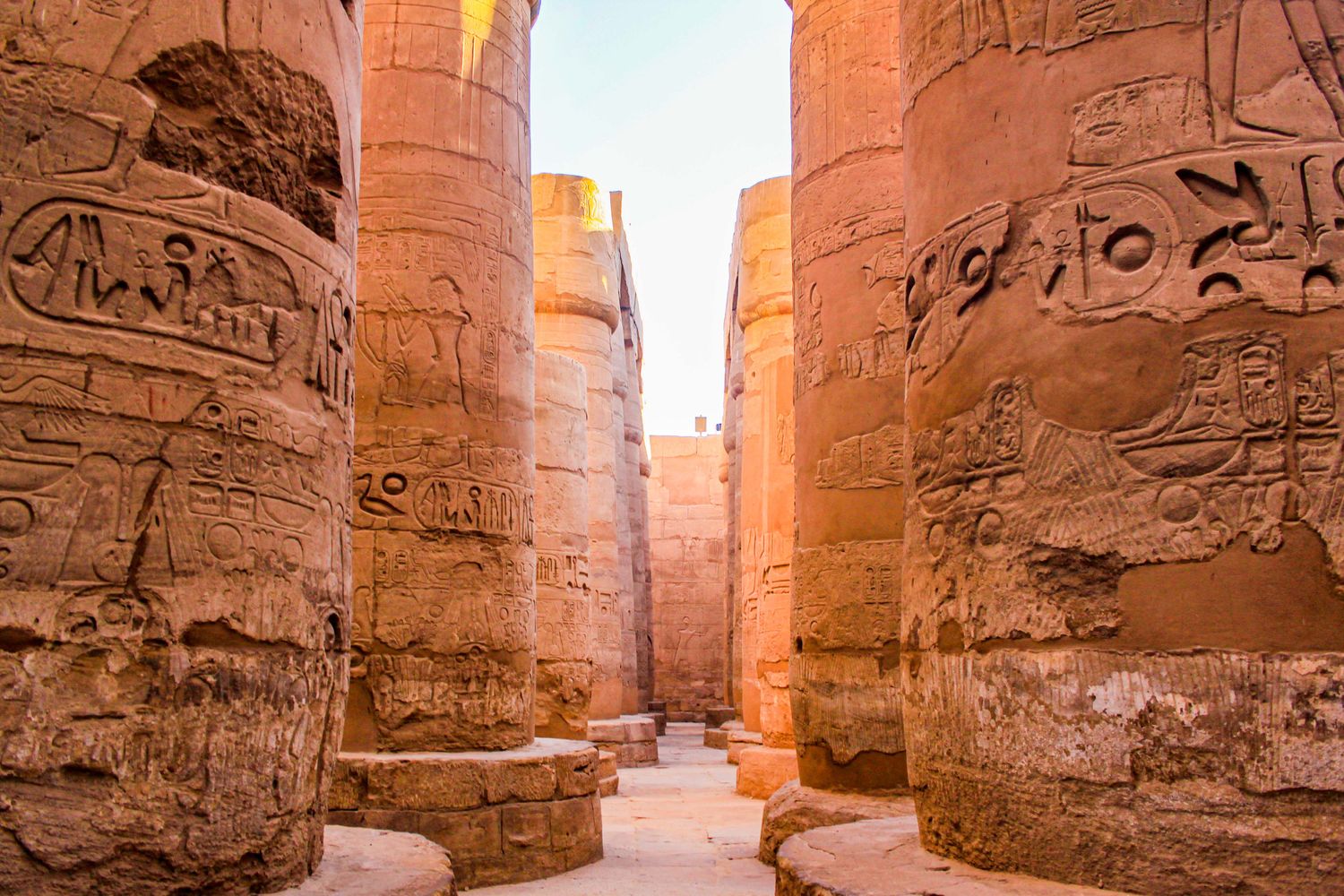
The graves ring the tombs of Egypt’s first rulers. The site is Umm el-Qaab, a royal cemetery at Abydos in southern Egypt. During the First Dynasty, roughly 5,000 years ago, the earliest kings of a unified Egypt built chamber tombs there, along with walled enclosures nearby that were probably used for funeral rites. Around both, workers dug rows of smaller graves, sometimes hundreds for a single ruler. Archaeologists call the people inside them “retainers,” a catch-all term for members of the royal household and court. Where gravestones survived, the titles point to low and mid-level officials: seal-bearers, inspectors, artisans, even a physician. The skulls include no children and few older adults, which fits a staff of working courtiers.
Petrie suspected sacrifice but couldn’t show it. He dug the graves around the enclosures in the early 1920s. Many seemed to have been filled and sealed at once, which made a string of natural deaths look unlikely to him. Yet he reported no trauma on the skeletons. So he reached for a darker idea. The retainers, he suggested in 1925, might have been “stunned (perhaps with a sand-bag) and buried before coming to.” Other scholars pushed back, arguing that these people died of natural causes over time and were laid beside their king. For about a century, both camps argued from Petrie’s original notes, because nobody had gone back to the bones with modern methods.
Only the skulls made the trip. Roselyn Campbell, an anthropologist at Purdue University in Indiana and the study’s sole author, worked with what is left. Petrie measured the long bones and then reburied them together in a single pit, so the rest of each skeleton is effectively lost. The crania went to England, many of them coated in wax. Today 46 of them sit in the Duckworth Collection at the University of Cambridge. They come from graves around the enclosures of the kings Djer and Djet and of Merneith, a queen who ruled as regent while her son was young.
Most of the injuries are single straight cracks. The most common wound Campbell found is a linear fracture, a straight break across the cranial vault, the dome of the skull. In the Abydos skulls these cracks all run across the parietal bones, on the top and upper sides of the head. A few skulls show a different kind of wound: a sharp object driven into the side of one head, and a chopping blow to an eye. Linear fractures happen when the skull strikes or is struck by a fairly large object with low overall force, Campbell explains in the study, and because the skull is round, the impact spreads across it. They don’t always kill on the spot. But they often cause bleeding inside the skull, which can bring on unconsciousness and death without surgery. Nobody on the Nile 5,000 years ago could drain a hematoma.
The wax gave Petrie away. Here’s the thing: the cracks were never hidden. Campbell notes that Petrie often applied his paraffin right around the fractures, a sign he knew those parts of the skull were fragile. What he lacked was the forensic knowledge to tell a break made around the time of death from one made by centuries of sand and weight. Fresh bone still holds moisture, so it bends a little before it snaps, leaving sharp, angled edges and hinged breaks. Dry bone shatters unevenly. That difference, built up through a century of forensic casework and lab experiments, simply wasn’t on the table in Petrie’s day.
The weapon probably wasn’t a mace. Egyptian art is full of the “smiting” scene, where a king raises a mace over a kneeling enemy, and it’s tempting to picture the retainers dying the same way. The skulls argue against it. Experiments cited in the study show that stone maces and hammers, even small ones, leave depressed fractures, the kind of dent you’d get by pressing a thumb into a ping-pong ball. Single straight cracks like the ones at Abydos usually come from flat, wide objects made of something lighter than stone, such as wood or antler. Picture a paddle, not a club. Campbell also points out that smiting scenes show the king killing foreign enemies, not his own officials.
Accidents don’t fit the pattern well. Forensic studies find that injuries above the “hat-brim line,” roughly where the brim of a hat would sit, tend to come from deliberate blows rather than falls, partly because people instinctively protect their heads when they go down. A fall from standing can sometimes crack a skull in a similar way, Campbell acknowledges, but it would be odd for so many people in such a small sample to fall the same way. Throwing the bodies into the graves hard enough to break a skull, or a roof caving in on them, should have damaged other bones and the grave goods too.
The buried-alive story doesn’t hold up. Petrie read splayed limbs and one raised, twisted head as signs of people struggling under the falling earth. Campbell argues that those poses are better explained by how bodies shift as they decay, or by bodies that were placed or tossed into the graves in a hurry. The man Petrie thought was pushing himself up had his left arm fully extended, an awkward and unstable way to lift a torso. Another idea, that the retainers were first buried elsewhere and moved later, also falls short. The tiny bones of the hands and feet were still in place, which is what you’d expect from a body that was never disturbed.
The study can’t settle every detail. Campbell is frank about the gaps. The surviving skulls represent only 5% to 15% of the people buried around each enclosure, so the sample may not reflect the whole group. Without the rest of the skeletons, other injuries, and even basics like sex and age, are hard to pin down. The wax hides the color differences that normally help date a fracture. And “perimortem,” the forensic term for injuries around the time of death, covers a window that runs from just before death to just after it. The study states plainly that there is no way to prove these injuries caused death, although there is no evidence that they came afterward either. More than half of the skulls show no such trauma, so some of these people may have died in other ways.
Abydos isn’t the only royal cemetery being reread. At Ur, in what is now Iraq, Leonard Woolley found court attendants laid out in royal tombs around the same time Petrie was digging, and imagined they had drunk poison and slipped away peacefully. When a University of Pennsylvania team later CT-scanned two of those skulls, they found severe blunt force injuries. At Kerma in Sudan, by contrast, a re-examination found no clear trauma on the sacrificed attendants, even though the way each tomb was sealed in one event points to sacrifice. Honestly, that contrast is part of what makes Abydos so intriguing. If some retainers were struck and others weren’t, they may not all have died the same way.
The next answers may already be sitting in museum drawers. The custom seems to have been short-lived. Aha, the first ruler of the dynasty, had only a few subsidiary burials, his successors had hundreds, and the graves fade out as the Second Dynasty begins. Campbell writes that Petrie’s original hypothesis of retainer sacrifice “may be correct,” and that the funerals of these early kings were likely “more nuanced and varied than we might have expected.” Her larger point is about collections like this one. Many skeletons dug up a century or more ago still sit in storerooms, carrying the conclusions of whoever first excavated them. Some of those conclusions will hold. Others, like a crack sealed under wax, are waiting for someone to look again.
Source: Campbell, R. A. “New data from old bones: using bioarchaeology and forensics to reassess legacy data from ancient Abydos, Egypt.” Frontiers in Environmental Archaeology 5, 1858940 (2026). Published October 5, 2026. DOI: 10.3389/fearc.2026.1858940
This article summarizes published scientific research for general information. It is not medical advice and does not replace consultation with a qualified health professional.