 Editorial NexoScience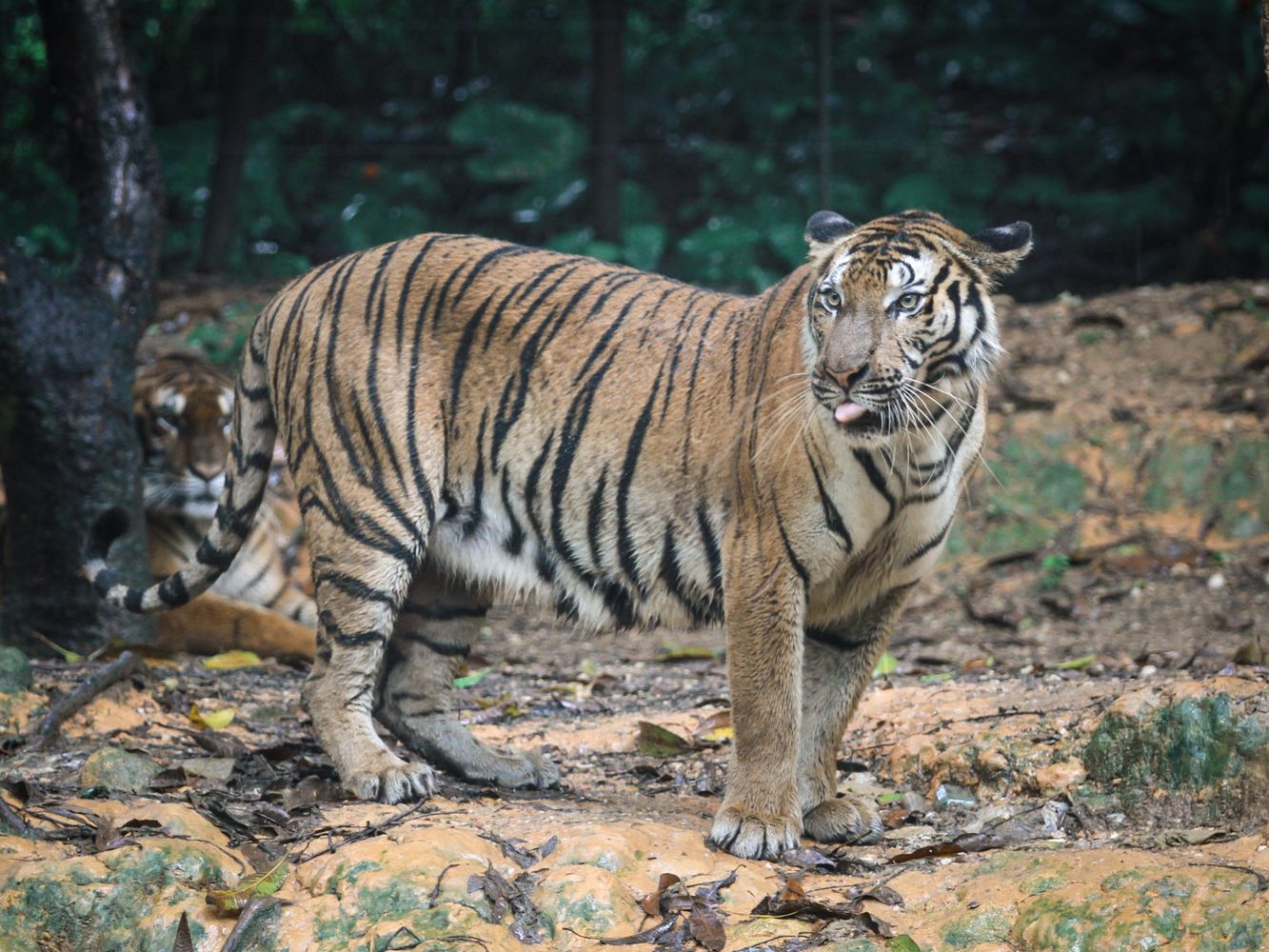
A wild boar strolling past a jungle camera trap at noon used to be unusual. In several Southeast Asian rainforests, it is now closer to routine.
Researchers have spent years tracking exactly when wildlife moves through the forest, and human pressure is rewriting the schedule. A team led by Samuel Xin Tham Lee, with colleagues from the University of Queensland and the University of British Columbia, analyzed 31,138 independent animal detections from 1,218 camera traps placed across ten rainforest landscapes in Thailand, Peninsular Malaysia, Singapore, Sumatra and Malaysian Borneo between 2013 and 2020, totaling 58,608 trap nights. Sixty three vertebrate species were included, from tigers and clouded leopards to macaques, deer and pheasants.
Across the whole community, the daily activity peak moved a full hour earlier, sliding from just before eight in the morning toward dawn. In the most disturbed forests, sampled with the Forest Landscape Integrity Index, detections became slightly more diurnal (up 1.2%) and notably more crepuscular, or active at dawn and dusk (up 2.0%), while purely nocturnal activity dropped by 3.2%. The secondary activity spike at dusk also grew more pronounced wherever human pressure was highest.
Not every animal responded the same way. Fifty nine rarer, more specialized species, the ones least tolerant of people, leaned harder into darkness in disturbed habitats. Tigers were the clearest example: in degraded forest they logged 16.5% more nocturnal detections and 5.4% more crepuscular ones, largely abandoning the early morning hours when humans are out and about.
Four generalist species took the opposite path and thrived. Bearded pigs, wild boar and two macaque species went from accounting for 39% of all detections in intact forest to 68% in the most disturbed sites, and grew even more active during daylight hours as they did it. Medium sized carnivores followed a similar diurnal shift, with 25.8% more daytime detections in disturbed areas, likely tracking the same abundant, human tolerant prey.
This is an observational study, built from camera traps in real forests, not a controlled experiment. Disturbance was measured with a composite index that folds together human density, roads, agriculture, logging and forest fragmentation, so the data can show a strong association between disturbance and behavior without pinning the shift on any single cause, be it hunting pressure, noise or habitat change. The authors are careful to frame their results as correlational for exactly that reason.
The real twist is what stayed the same. Despite all that individual rescheduling, the overlap in activity time between predators and their prey barely moved between intact and disturbed forest, a difference that was not statistically significant. Overlap between potential competitor species held steady too. In other words, tigers went more nocturnal and pigs went more diurnal, yet the odds that a given predator and its prey are active at the same moment stayed roughly where they started.
The authors suggest one reason may be historical: Southeast Asian wildlife has coexisted with human hunters for roughly 45,000 years, so the species still present today may already be comparatively tolerant of disturbance, having lost the most sensitive members of their communities long ago. They also note that these findings could help guide conservation planning, such as limiting noise or human activity in protected areas during the hours when priority species are most active, rather than assuming that disturbance always rewires who eats whom.
Source: Lee, S. X. T., Amir, Z., Moore, J. H., Gaynor, K. M. & Luskin, M. S. “Effects of human disturbances on wildlife behaviour and consequences for predator-prey overlap in Southeast Asia.” Nature Communications, 2024. DOI: 10.1038/s41467-024-45905-9.