 Editorial NexoScience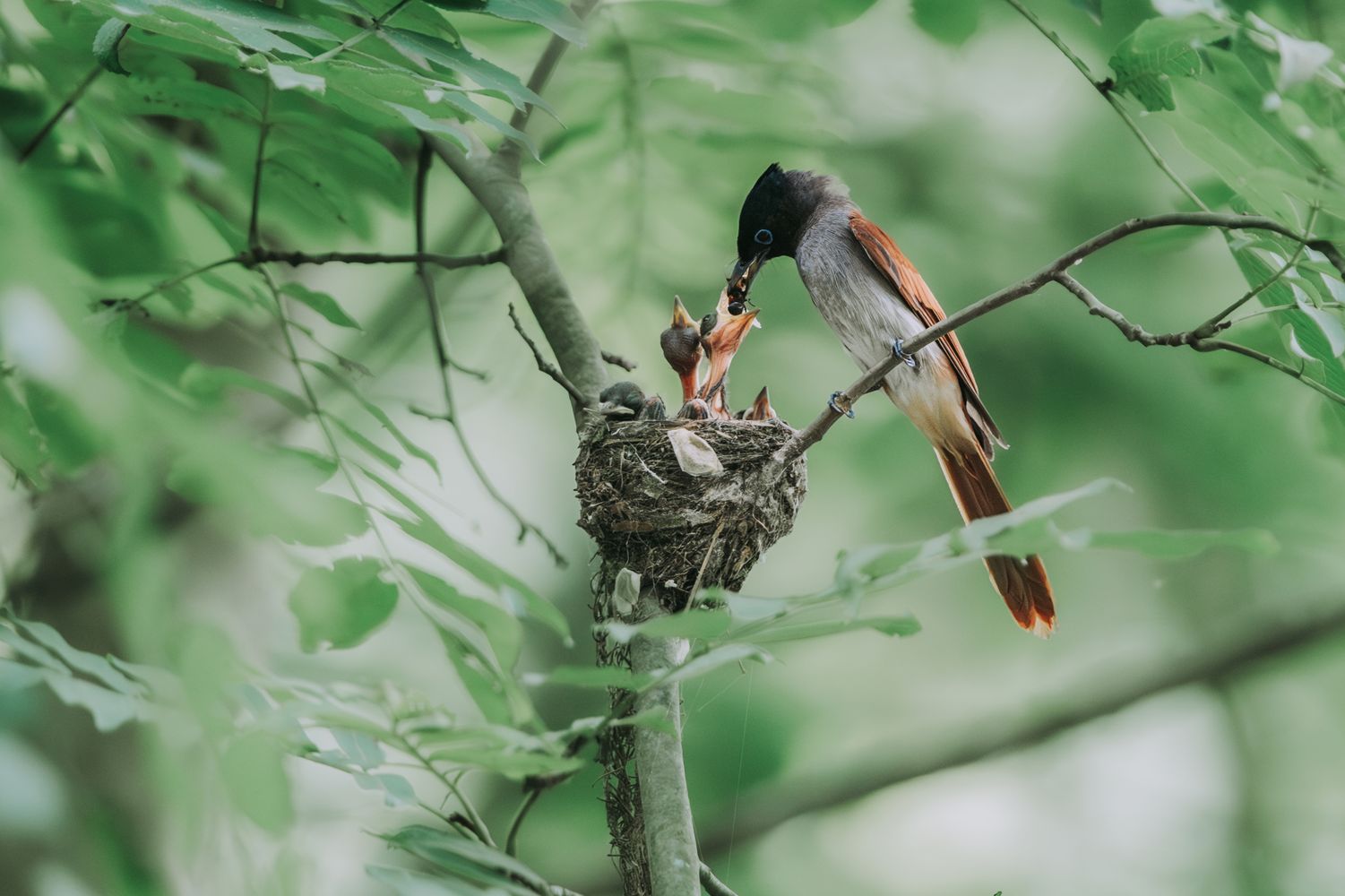
Some birds are adjusting just fine to a warmer world. Others are quietly running out of chicks to raise, and the split has surprisingly little to do with predators, pesticides or shrinking habitat.
That is the picture that emerges from the largest analysis of its kind ever assembled: fifty years of breeding records, 201 bird populations, 104 species, and 745,962 individual clutches monitored on every continent between 1970 and 2019. The team behind the project, publishing in the Proceedings of the National Academy of Sciences (PNAS), set out to answer a question that had gone strangely unexamined until now. Everyone already knew birds were nesting earlier as the planet warms. Almost nobody had checked whether they were actually raising more chicks as a result, or fewer.
The answer leans negative, but not evenly. In 114 of the 201 populations studied, 56.7%, offspring production dropped over those five decades, and in nearly a fifth of them the decline was statistically significant. The remaining 87 populations, 43.3%, went the other way, producing more young over time. Averaged across the whole dataset, the overall trend tips into negative territory: about a 0.01 standard deviation decline in offspring per year. That sounds tiny, but compounded over fifty years across hundreds of populations, the researchers say it adds up to a real and measurable drop in the number of birds fledged worldwide.
Size, not location, decided who struggled. Latitude did not predict which populations declined, and neither did whether a study area was legally protected, nor a formal measure of local human impact combining roads, buildings, farmland and night lights. The one factor that consistently mattered was body mass. Species heavier than roughly 1 kilogram if sedentary, or heavier than about 50 grams if migratory, tended to produce fewer offspring as local temperatures rose by about 0.1°C a year. Smaller, non-migratory birds often showed the opposite pattern, with warmer seasons lining up with more chicks fledged, not fewer.
Staying put turned out to be an advantage. Migratory species fared worse overall than sedentary ones, with only the very smallest migrants escaping the pattern. The authors point to a mismatch hypothesis already documented in other bird research: species that winter far from their breeding grounds cannot always track how fast spring is arriving back home, so they end up arriving too late, or occasionally too early, relative to the peak availability of caterpillars, insects and other food their chicks depend on. Resident species, tuned in year round to their own patch of forest or wetland, can shift their timing more precisely.
Multi-brooded species got a small climate bonus. Birds capable of raising two or more broods a season saw their nest success improve as temperatures rose, something the authors link to earlier vegetation growth that hides nests from predators sooner in the year. Single-brooded species showed no such relationship. Clutch size itself barely moved with climate at all; the only trait that reliably predicted a smaller clutch was, again, a bigger body.
The link is real, but the underlying causes are still tangled. The team is careful to note that rising temperatures do not appear to affect offspring production directly. Instead, climate change interacts with a species’ size, migratory strategy and number of broods per year, and those interactions are what ultimately push the numbers up or down. The dataset also skews toward Europe and North America, with far fewer long-term records from the tropics, so the true global picture could look somewhat different once more data arrives from underrepresented regions.
It is not the whole story behind vanishing birds. Multiple recent surveys have documented steep declines in overall bird numbers across North America and Europe. This analysis suggests offspring production alone does not explain the scale of those losses, since the average decline it found was small. That points toward adult and juvenile survival, rather than how many chicks hatch each year, as a bigger piece of the puzzle, something the authors say future research still needs to pin down.
Source: Halupka, L., Arlt, D., Tolvanen, J. et al. “The effect of climate change on avian offspring production: A global meta-analysis.” Proceedings of the National Academy of Sciences (PNAS), 2023. DOI: 10.1073/pnas.2208389120.