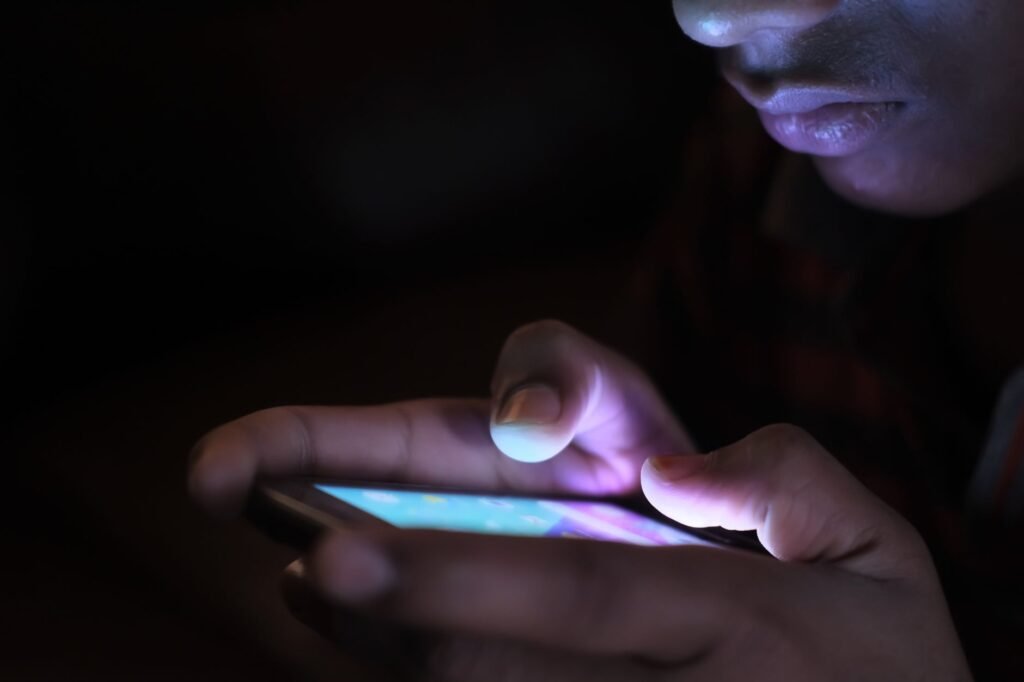
Scroll through TikTok for “just five minutes” and somehow forty have gone by. Millions of people know that feeling, and now the largest analysis ever done on short videos and mental health has some real numbers to put on it.
A team from the Chinese University of Hong Kong and other Chinese universities reviewed 58 studies covering almost 97,000 people, published in the Journal of Medical Internet Research. Short video use is linked to more depression, anxiety, stress, loneliness and boredom. None of these links are huge in statistical terms, but they are consistent: the more short videos someone watches overall, the worse they tend to score on these measures.
But the real finding is that it is not about time spent, it is about dependency. The researchers split participants into two groups: routine use (simply minutes or hours per day) and problematic use (addiction, dependency, an inability to control the habit). The difference between the two groups was enormous. Problematic use showed a clear, moderate link to depression, anxiety, stress, loneliness and boredom. Routine use barely showed any link at all, and in several analyses that weak link disappeared entirely once a single study was removed from the sample, a sign it was not a solid result to begin with.
With anxiety specifically, the contrast was even sharper. Problematic use was linked to a moderate rise in anxiety, while routine use, simply spending time watching short videos without a pattern of dependency, showed no meaningful link at all.
Overall wellbeing only took a hit in people who could not stop. Looking at all users together, there was no significant link between watching short videos and general wellbeing or positive emotions. That link only showed up, and only in the negative direction, within the problematic use group.
Short videos seem to weigh heavier than traditional social media. Comparing their results to previous meta-analyses on problematic phone, internet or general social media use, the authors found the link between problematic short video use and mental health was stronger than for those other categories. Their hypothesis: the format itself, extremely brief clips recommended by an algorithm that learns from every second watched, creates a different kind of hook than other screens.
The researchers point to three possible mechanisms: the recommendation algorithm itself, which builds an increasingly personalized content bubble that can deepen isolation; the format itself, with such short clips and rapid cuts that it may fragment attention and overload cognitive processing; and the fact that more and more users move from watching to creating content, with the added pressure of views and ad revenue that earlier generations of social media users did not face in the same way.
This is correlation, not a controlled experiment, and that matters. Almost all the included studies are cross sectional, meaning they capture participants at a single point in time without establishing what came first. The relationship could run in several directions at once: people with anxiety or boredom might turn to short videos as an escape, problematic use might generate anxiety by displacing sleep or fueling social comparison, or both could feed each other over time. 55 of the 58 studies were conducted in China, so more research elsewhere is needed before treating these results as universal.
The practical takeaway, according to the authors themselves, is not to quit TikTok or Instagram Reels. It is to watch for the signs of dependency: difficulty stopping, distress when the app is not accessible, or use that displaces other activities. Simply watching short videos occasionally, without that hooked pattern, showed no clear link to worse mental health in this analysis.
Source: Tang D, Zhang X, Gou P, Feng J, Hu R, Sum KR. “Association Between Short-Form Video Use and Mental Health: Systematic Review and Meta-Analysis.” Journal of Medical Internet Research, 2026. DOI: 10.2196/82503.